UK's Summer 2026 Could Shatter Heat Records, Warns Met Office
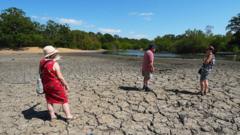
Summer 2026 is tracking to become the UK's hottest season on record. The Met Office reveals only average conditions are needed to break last year's record.
Summer 2026 Tracking Toward Record-Breaking Heat in the United Kingdom
The UK's summer 2026 is positioned to become the nation's hottest on record, according to recent analysis from the Met Office. The meteorological authority has indicated that achieving this remarkable milestone requires only average weather conditions throughout the remainder of August, making an exceptional outcome increasingly probable.
What Makes This Summer Exceptionally Warm?
The conditions observed so far have established a trajectory that puts summer 2026 in line to surpass the previous record, which was established just twelve months prior in 2025. This back-to-back occurrence of extreme temperatures underscores an emerging pattern in UK climate behavior. The Met Office's assessment reveals that the thermal anomalies registered during spring and early summer have created a substantial buffer, meaning typical late-summer weather would be sufficient to cement this unprecedented status.
The Significance of Record-Breaking Temperatures
Breaking temperature records carries substantial implications for the United Kingdom's environmental and economic sectors. When summer 2026 achieves this distinction, it will represent a significant departure from historical temperature patterns that have characterized British summers for generations. The Met Office's projections are based on comprehensive atmospheric data and advanced meteorological modeling techniques that account for various climatic factors.
Understanding the Met Office's Analysis
The Met Office's conclusion that only average conditions are needed to break the record demonstrates how far above-normal temperatures have already accumulated during the current season. This measurement reflects not merely a few degrees of elevation but a consistent, sustained warmth across multiple weeks. The organization's specialists have meticulously tracked temperature variations, precipitation patterns, and atmospheric pressure systems to reach their conclusions.
Comparative Context: Last Year's Record
The previous record established in 2025 sets the benchmark against which summer 2026 is being measured. That earlier extreme heat event itself was notable enough to capture meteorological attention, yet the prospect of its being surpassed so rapidly highlights the accelerating nature of temperature trends. The fact that two consecutive years could produce record-breaking conditions demonstrates a shift in the climate baseline for the United Kingdom.
Implications for British Residents and Infrastructure
Sustained high temperatures during summer months affect numerous aspects of British life, from agricultural productivity to energy consumption patterns. Infrastructure designed for cooler climates may face unprecedented stress during extended heat periods. Water resources, transportation systems, and public health services all experience varying degrees of pressure when summer 2026 persists with above-average thermal conditions.
Met Office Methodology and Confidence Levels
The Met Office's prediction that only average conditions are needed to establish a new record is grounded in sophisticated scientific methodology. Their assessment incorporates observational data from extensive weather station networks, satellite measurements, and advanced computational models. The high confidence in this projection reflects the substantial temperature surplus already accumulated before the conclusion of the summer season.
Looking Forward: The Broader Climate Picture
The likelihood of summer 2026 becoming the UK's hottest on record contributes to a larger conversation about long-term climate trends affecting the British Isles. These temperature records provide important data points for climate researchers and policymakers contemplating adaptation and mitigation strategies. The Met Office continues to monitor atmospheric conditions closely to refine forecasts and provide timely information to relevant authorities and the public.


