Trump's New Tariffs Spark Trade War as Carney Denounces 'Miscalculation'
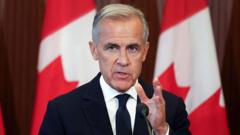
Canada's PM calls Trump's tariffs a miscalculation as trade negotiations fail. Fresh tensions emerge with retaliatory measures announced in escalating trade dis...
Trump's Tariffs Marked as Strategic Error by Canadian Leadership
In a pointed rebuke following the breakdown of international trade negotiations, Canada's prime minister has characterized Trump's tariffs as a significant strategic miscalculation that threatens to destabilize North American commerce. The escalation marks a critical turning point in ongoing trade disputes between the two nations, with Canada preparing defensive economic measures in response to the tariff announcements.
Retaliatory Measures Announced Amid Trade Tensions
The Canadian government announced it would reluctantly implement retaliatory tariffs, directly attributing the decision to what officials describe as aggressive trade war tactics initiated by the United States. This move represents a formal escalation in the tit-for-tat economic confrontation that has increasingly defined bilateral relations between Ottawa and Washington.
According to government statements, the retaliatory tariffs were not the preferred outcome for Canadian officials. Instead, they characterize the measure as a necessary defensive response to protect domestic industries and workers from the impact of newly imposed American duties. The decision underscores mounting frustration with the collapse of formal trade dialogue channels.
Failed Trade Negotiations and Their Consequences
The announcement comes following the complete breakdown of trade talks between the two nations. Negotiations, which had been positioned as opportunities to resolve underlying trade disputes through dialogue and compromise, ended without reaching any agreement or framework for future discussions.
Canadian officials emphasized that they had approached negotiations with genuine commitment to finding mutually beneficial solutions. However, they contend that the Trump administration's decision to implement new tariffs without concluding these discussions represented a departure from established diplomatic protocols and negotiated trade frameworks.
The Accusation of Trade War Initiation
Canadian government representatives have directly accused the United States of initiating trade war conditions through its tariff strategy. This characterization moves beyond standard trade dispute language, suggesting a fundamental breakdown in the economic relationship between the neighboring nations.
The accusation reflects Canadian concerns that the tariff strategy follows a pattern of aggressive unilateral action rather than collaborative problem-solving. Officials argue that such approaches undermine the predictability and stability necessary for sustainable trade relationships, particularly between countries with deeply integrated supply chains and economic interdependencies.
Implications for North American Trade Relations
The sequence of events—failed negotiations followed by tariff announcements and retaliatory measures—signals a deterioration in the trade environment. For businesses operating across the border, the uncertainty created by Trump's tariffs and the subsequent Canadian response introduces significant planning challenges.
Supply chain disruptions represent one of the most immediate concerns, given the extensive cross-border integration of manufacturing and commerce. Companies dependent on duty-free or low-tariff trade have begun assessing alternative sourcing strategies and adjusting operational models to navigate the changing trade landscape.
Broader Context of Trade Disagreements
The current tensions emerge from longstanding disputes over market access, agricultural products, and industrial goods. Both nations have previously engaged in trade disputes, but the current escalation appears more comprehensive and less amenable to quick resolution through traditional diplomatic channels.
Economic analysts note that the tariff spiral risks creating a negative feedback loop in which retaliatory measures by one side trigger further responses from the other, progressively reducing trade volumes and economic growth prospects for both nations.
Looking Forward: What Remains Uncertain
The path toward de-escalation remains unclear. With Trump's tariffs formally implemented and Canadian retaliatory tariffs now announced, the question becomes whether either government will attempt to restart negotiations or whether the current trajectory continues toward further economic isolation.
Canadian officials have indicated their willingness to return to the negotiating table, provided the United States demonstrates reciprocal commitment to resolving disputes through dialogue rather than unilateral action. However, concrete timelines for any resumption of trade talks have not been established.


