Rare Solar Eclipse Mesmerizes UK and Europe with Spectacular Cosmic Display
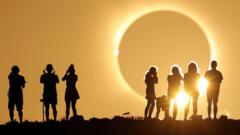
A rare solar eclipse captivated millions across the UK and Europe, with over 95% sun coverage in Cornwall and total eclipse visibility in Spain.
Millions Witness Extraordinary Solar Eclipse UK and Europe Event
A remarkable solar eclipse UK and Europe phenomenon captured the attention of millions of spectators across the continent, delivering an unforgettable astronomical experience that unfolded across multiple nations. The celestial event demonstrated the extraordinary power of nature's cosmic dance, as the Moon positioned itself directly between Earth and the Sun, creating an awe-inspiring natural spectacle that transcended borders and united people in shared wonder.
Exceptional Coverage in Cornwall and the Southwest
The southwestern region of England experienced particularly impressive solar eclipse conditions, with Cornwall witnessing an extraordinary 95% coverage of the Sun's surface by the lunar body. This remarkable percentage made it one of the most significant astronomical events visible from the British Isles in recent decades. Observers equipped with specialized solar viewing equipment and protective eyewear gathered at designated viewing sites throughout the county to witness the phenomenon unfold across approximately three hours of gradual progression.
The partial eclipse in Cornwall provided dramatic visual effects as the Moon's silhouette gradually consumed the solar disk. Photography enthusiasts captured stunning images showcasing the Sun's crescent shape at maximum eclipse, while scientists conducted observations to gather valuable data about solar physics and atmospheric effects during the event.
Total Eclipse Phenomena in Spanish Territory
While the UK experienced a substantial partial eclipse, certain regions of Spain became privileged witnesses to the complete total eclipse phenomenon. The path of totality across Spanish territory created zones of complete darkness at midday, a breathtaking experience documented by thousands of eclipse chasers and astronomy enthusiasts who traveled specifically to observe this rare occurrence.
During the total phase in Spain, observers witnessed the Sun's corona becoming visible to the naked eye—a phenomenon impossible during normal daylight hours. This ethereal display of the Sun's outer atmosphere created an otherworldly environment, with temperatures dropping noticeably and wildlife exhibiting unusual behavioral patterns.
Continental Reach and Widespread Impact
Beyond the UK and Spain, the solar eclipse cast its influence across numerous European nations, with partial coverage visible from France, Portugal, and other Mediterranean countries. This widespread visibility transformed the event into a genuinely pan-European occurrence, with coordinated viewing events organized in major cities and scientific institutions throughout the continent.
Educational institutions capitalized on the astronomical significance of the solar eclipse UK and Europe event, organizing special programs and public viewing sessions to engage students and community members. Museums, planetariums, and astronomy clubs hosted lectures and exhibitions explaining the mechanics behind eclipse phenomena and their historical cultural significance.
Scientific Significance and Research Opportunities
The solar eclipse provided unprecedented opportunities for scientific research and data collection. Astrophysicists and solar researchers positioned advanced instruments across the eclipse path to study solar corona activity, measure atmospheric effects, and gather information about the Sun's outer layers. Satellite-based observations complemented ground-based measurements, creating comprehensive datasets for future solar research.
Universities and research organizations coordinated international collaboration to maximize scientific yield from the celestial event. Spectroscopic analysis of the Sun's corona during totality revealed insights into solar magnetic fields and plasma dynamics that cannot be studied effectively during non-eclipse conditions.
Public Engagement and Safety Measures
Authorities across the continent prioritized public safety during the solar eclipse UK and Europe phenomenon, distributing millions of certified solar viewing glasses and establishing guidelines for safe observation. Public health campaigns emphasized the dangers of unprotected solar observation, preventing eye damage among enthusiastic spectators.
Emergency services reported minimal incidents, with comprehensive public education campaigns successfully encouraging responsible viewing practices. Hospitals and medical facilities remained on alert, though the prevalence of proper safety measures resulted in remarkably few eclipse-related injuries.
Legacy of a Generational Astronomical Event
The solar eclipse that mesmerized UK and European populations will remain memorable for participants who witnessed this extraordinary intersection of planetary mechanics and human curiosity. For many observers, particularly younger generations, the event represented their first opportunity to witness such a dramatic astronomical phenomenon, creating lasting impressions and potentially inspiring future interest in astronomy and space science.


