Infantino's Future in Doubt: UEFA Threatens World Cup Boycott
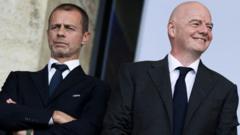
UEFA's World Cup boycott threat and Concacaf's rejection of Infantino's funding plan create uncertainty. What's next for FIFA's president?
Infantino's Position Under Unprecedented Pressure
The football world faces a critical juncture following a tumultuous 48-hour period that has fundamentally challenged FIFA leadership. Infantino's controversial funding initiatives have triggered a major split within international football's governing bodies, with UEFA signaling a potential World Cup boycott and Concacaf formally rejecting the proposed financial arrangement. These developments raise serious questions about Infantino's ability to maintain his position and the future direction of global football administration.
UEFA's Unprecedented Threat
European football's governing body has taken an extraordinarily bold stance by threatening to withdraw from the World Cup—a move virtually unthinkable in modern football history. This escalation represents far more than a disagreement over administrative procedures; it reflects deep-seated concerns within UEFA's membership regarding the distribution of revenues and governance transparency. The organization's willingness to contemplate such drastic action signals genuine frustration with FIFA's current leadership trajectory and the perceived inequitable treatment of its constituent nations.
Why This Matters for UEFA Members
For European federations, the stakes extend beyond financial considerations. The threatened boycott reflects anxieties about decision-making processes that many view as opaque and favoring certain confederations over others. UEFA's position strengthens smaller nations' voices, establishing a united front against funding proposals deemed unjust by its leadership.
Concacaf's Formal Rejection
Simultaneously, Concacaf's decisive rejection of Infantino's funding plan demonstrates that opposition transcends continental boundaries. The North and Central American football confederation's refusal represents a significant blow to the FIFA president's credibility, particularly given the region's traditional alignment with FIFA leadership on major decisions. This defection suggests that Infantino's proposal fundamentally fails to address multiple confederations' legitimate grievances.
The Financial Dispute at Core
The rejected funding model appears to redistribute World Cup revenues in ways that disadvantage certain regional confederations. Without detailed transparency regarding fund distribution mechanisms, many nations view the proposal as benefiting FIFA's central operations while reducing resources directed toward member confederations and their development programs.
Implications for Infantino's Leadership
Whether Infantino can survive this political crisis remains uncertain. His tenure has been marked by ambitious reform initiatives, but recent developments suggest significant portions of international football's leadership question his judgment and commitment to equitable governance. The simultaneous opposition from UEFA and Concacaf creates an unprecedented coalition that could fundamentally alter FIFA's power structure.
Historical Context
FIFA has weathered leadership crises before, but the current situation's scope appears unprecedented. Unlike previous scandals focusing on individual corruption allegations, today's challenge strikes at the governance model itself and questions about leadership legitimacy across multiple confederations.
What Happens Next?
Several scenarios may unfold in coming weeks. FIFA leadership could initiate emergency negotiations to salvage Infantino's proposals through significant modifications. Alternatively, confederations might escalate demands for leadership accountability, potentially triggering formal votes of confidence. The World Cup boycott threat, while dramatic, might serve as leverage for extracting concessions rather than representing a genuine intention.
Negotiation Pathways
FIFA's executive committee likely faces pressure to convene emergency sessions addressing confederation concerns. Proposals for revised funding mechanisms that provide greater equity might mollify opposition. However, any resolution must convince UEFA and Concacaf that governance structures themselves are reformed, not merely financial distributions adjusted.
Broader Implications for Football Governance
This crisis exposes fundamental tensions within FIFA's organizational structure. Smaller confederations feel marginalized in decision-making processes, while major football powers question the distribution of World Cup revenues. Resolving these issues requires more than superficial compromises; structural governance reforms appear essential.
The coming weeks will determine whether Infantino retains sufficient support to maintain his position or whether this moment marks the beginning of FIFA leadership transitions. What remains certain is that international football's governance faces a reckoning that cannot be postponed or minimized through typical diplomatic maneuvering.


