Helium-3 Mining on the Moon: Future Energy Source
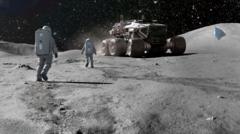
Discover why Helium-3 from the moon could revolutionize energy production. Explore lunar mining potential and costs of this rare isotope.
Understanding Helium-3: The Rare Isotope Reshaping Energy
Helium-3 mining on the moon represents one of the most ambitious energy initiatives of the 21st century. This rare isotope, which occurs naturally in trace amounts on Earth but abundantly in the lunar regolith, has captured the attention of scientists, engineers, and space agencies worldwide. The interest in Helium-3 stems from its remarkable potential as a clean, efficient fuel source for advanced nuclear fusion reactors.
Unlike its more common counterpart Helium-4, Helium-3 possesses unique nuclear properties that make it exceptionally valuable for fusion energy generation. As global demand for renewable and sustainable energy sources continues to escalate, Helium-3 mining on the moon has emerged from science fiction into serious scientific discourse and feasibility studies.
The Scarcity of Helium-3 on Earth
On our planet, Helium-3 exists in extremely limited quantities, making it extraordinarily expensive to obtain. The isotope is produced only through nuclear weapons testing and certain specialized industrial processes, resulting in minimal available reserves. This scarcity drives astronomical prices, with estimates suggesting costs could exceed thousands of dollars per gram for purified Helium-3.
The challenge of sourcing adequate Helium-3 supplies presents a significant bottleneck for fusion energy development. Current terrestrial production cannot meet the projected demands of advanced fusion power plants that researchers envision operating within the next few decades. This fundamental limitation has naturally directed scientific attention toward alternative sources, particularly the moon.
Why the Moon Holds Helium-3 Reserves
The lunar surface contains substantial deposits of Helium-3, accumulated over billions of years through solar wind interactions. Unlike Earth's protective magnetic field, the moon lacks significant atmospheric shielding, allowing solar particles rich in Helium-3 to embed directly into the regolith. Estimates suggest the moon harbors enough Helium-3 to satisfy global energy needs for centuries.
Lunar samples collected during Apollo missions confirmed the presence of Helium-3 at concentrations of between 10 and 20 parts per billion within the lunar soil. While this might seem minimal, the vast expanse of lunar territory and the shallow depth of deposits make large-scale extraction theoretically viable.
Mining Helium-3: Technical Challenges and Solutions
Extracting Helium-3 from lunar regolith requires sophisticated mining infrastructure and processing technology. The proposed extraction method involves heating lunar soil to release trapped gases, followed by sophisticated separation processes to isolate Helium-3 from other elements. Engineers envision deploying robotic mining equipment controlled from Earth or operated by future lunar settlements.
The process begins with excavation of surface regolith, followed by heating to approximately 600 to 700 degrees Celsius. This thermal treatment releases the embedded gases, which are then collected and processed through cryogenic separation systems. The separated Helium-3 would be liquefied and stored for transport back to Earth or utilized by lunar-based fusion reactors.
Economic Feasibility and Cost Considerations
While the Helium-3 mining on the moon presents extraordinary potential, significant economic hurdles remain. Establishing mining operations on the lunar surface requires enormous initial capital investment, including development of advanced spacecraft, life support systems, and processing facilities. Transportation costs to Earth would be substantial, though proponents argue that the extreme value of Helium-3 could justify these expenses.
Current estimates suggest that mining Helium-3 could become economically viable when fusion energy technology matures and global energy demand intensifies. Some calculations indicate that a single lunar mission could return hundreds of kilograms of Helium-3, worth billions of dollars at current market rates. However, reducing launch costs through reusable spacecraft technology and establishing permanent lunar infrastructure remains essential for commercial viability.
International Interest and Future Prospects
Multiple nations and private space companies have expressed serious interest in lunar resource extraction. Space agencies including NASA, ESA, and CNSA have incorporated Helium-3 assessments into their long-term lunar exploration strategies. Private enterprises are simultaneously developing technologies that could support commercial-scale mining operations within the coming decades.
The prospect of Helium-3 mining on the moon extends beyond energy production, potentially stimulating broader space industry development and international cooperation. Establishing sustainable lunar mining operations would require developing advanced robotics, autonomous systems, and closed-loop life support technologies with applications far beyond lunar exploration.
As fusion energy technology continues advancing and global energy demands intensify, Helium-3 from the moon may transition from speculative concept to essential resource. The convergence of improved fusion reactor designs, decreased launch costs, and technological advances in autonomous mining systems could accelerate the timeline for commercial-scale extraction of this precious lunar resource.


