Glacier Collapse Triggers Catastrophic Nepal-Tibet Floods
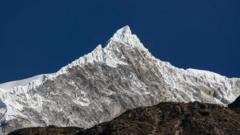
Scientists confirm glacier collapse caused devastating Nepal-Tibet floods, exposing urgent climate crisis threatening Himalayan regions and communities worldwid...
Glacier Collapse Identified as Primary Cause of Nepal-Tibet Disaster
A glacier collapse has been definitively identified as the triggering mechanism behind the catastrophic floods that devastated regions across Nepal and Tibet, according to preliminary findings from an international team of climate scientists. The glacier collapse, which unleashed torrents of water and debris across mountainous terrain, represents a stark illustration of the accelerating environmental transformation occurring throughout the Himalayan mountain range.
Scientific Evidence Points to Rapid Ice Deterioration
Research teams conducting field investigations have gathered substantial evidence demonstrating how the glacier collapse fundamentally altered water flow patterns across the affected regions. The scientific analysis reveals that rapidly melting Himalayan ice has created increasingly unstable conditions, making similar catastrophic events more probable in the future. Researchers emphasize that this incident should serve as a critical wake-up call regarding the broader implications of climate change in mountain ecosystems.
Understanding the Mechanism Behind Glacial Failure
The collapse mechanism involved the progressive weakening of glacier structural integrity due to elevated temperatures and increased meltwater penetration. As thermal stress accumulated within the ice mass, internal fractures expanded, ultimately leading to the catastrophic failure event. Scientists note that this particular glacier collapse demonstrates how subtle environmental changes can trigger disproportionately severe consequences within alpine environments.
Himalayan Ice Crisis Demands Immediate Attention
The rapidly melting Himalayan ice presents unprecedented challenges for millions of people living downstream from these mountain systems. Water resources, agricultural productivity, and hydroelectric generation all depend on stable glacier dynamics that are now fundamentally compromised. The glacier collapse serves as tangible evidence of how climate destabilization manifests in real-world disasters affecting vulnerable populations.
Regional Impact and Long-term Consequences
Communities throughout Nepal and Tibet face mounting climate-related hazards as Himalayan glaciers continue their inexorable retreat. The devastating floods demonstrate that glacier collapse events can occur with limited warning, leaving little time for evacuation or protective measures. Regional authorities are now confronting the sobering reality that traditional risk assessment frameworks may underestimate the severity of contemporary climate-driven hazards.
Global Climate Implications of the Disaster
This glacier collapse incident reflects broader patterns of environmental degradation observable across mountain ranges worldwide. Scientists stress that the Himalayan region represents a critical indicator of planetary climate health, given the enormous human populations dependent on its water resources and ecological services. The disaster underscores how climate change transcends political boundaries, affecting billions of people through interconnected environmental systems.
Accelerating Trends in Glacial Retreat
Recent observational data confirms that the rate of glacial retreat throughout the Himalayas has intensified significantly during recent decades. Temperature increases in mountain regions exceed global average warming rates, creating particularly pronounced impacts on alpine ice masses. The glacier collapse represents an extreme manifestation of these accelerating trends in Himalayan environmental change.
Implications for Future Risk Management
The Nepal-Tibet floods highlight critical gaps in current disaster preparedness frameworks for glacial hazards. Traditional engineering approaches prove inadequate when confronting the novel climate scenarios now emerging. Scientists recommend comprehensive reevaluation of risk models to incorporate the accelerating pace of Himalayan ice deterioration and the increasing probability of cascade failure events within these complex mountain systems.
The glacier collapse that triggered this catastrophic event demands sustained international attention and coordinated climate action. Without decisive mitigation efforts addressing greenhouse gas emissions, similar or more severe glacier-related disasters will likely become increasingly frequent occurrences affecting Himalayan communities and extending consequences throughout Asia's water systems.


