
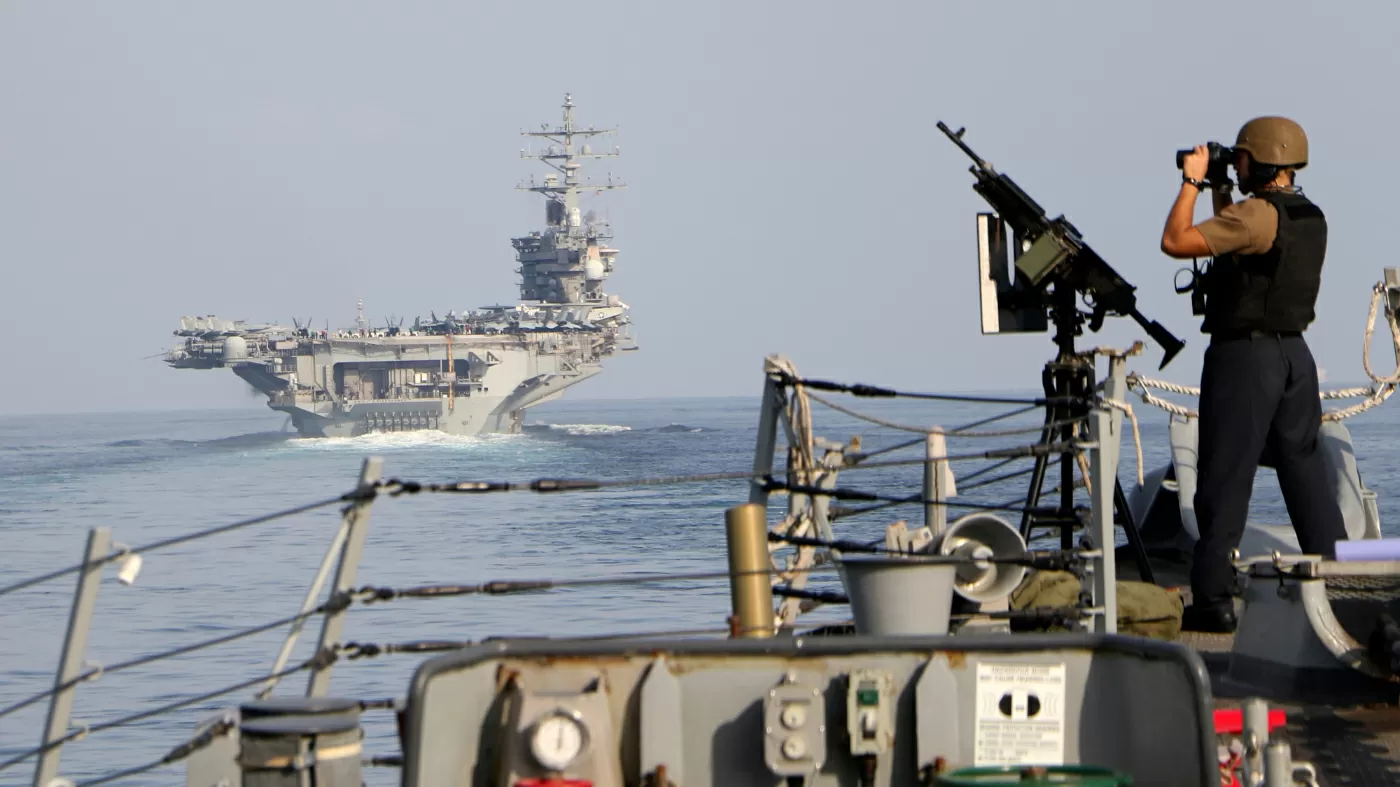
In a move to ensure safe and secure passage through the Strait of Hormuz, the U.S. military launched operations to demine the strategic waterway. However, the operation was met with a stern warning from the Islamic Revolutionary Guard Corps (IRGC) navy.
According to a report by The Wall Street Journal, an American destroyer in the Strait of Hormuz received a radio communication from the IRGC navy, stating, “This is the last warning. This is the last warning.” This incident has once again highlighted the tense relationship between the United States and Iran, and the potential for escalation in the region.
The Strait of Hormuz, located between Iran and Oman, is one of the most crucial chokepoints for global oil supply, with nearly 20% of the world’s oil passing through its narrow waters. As a result, any disruption in this passageway can have a significant impact on the global economy. It is also a strategic location for the U.S., with its naval presence in the region to ensure freedom of navigation and protect its allies.
The U.S. operation to demine the Strait of Hormuz is a crucial step towards promoting maritime security and stability in the region. The presence of mines in the waterway not only poses a threat to commercial vessels but also to the safety of military ships. Therefore, the U.S. military’s efforts to clear the strait of these dangerous explosives are commendable and demonstrate their commitment to maintaining peace and security in the region.
However, the warning from the IRGC navy serves as a reminder of the ongoing tensions between the two countries. The U.S. and Iran have been at odds for decades, with recent events, including the killing of Iranian General Qasem Soleimani by the U.S. in January, further escalating the situation. The warning also comes at a time when the U.S. has been increasing its military presence in the region, leading to heightened tensions and concerns of a potential conflict.
It is essential for both the U.S. and Iran to exercise restraint and engage in diplomacy to de-escalate the situation. The warning from the IRGC navy should not be taken lightly, and it is crucial for both sides to engage in dialogue and find a peaceful solution to their differences. The U.S. has stated that its operations in the Strait of Hormuz are purely defensive and meant to ensure the safety of its ships and allies. It is essential for Iran to understand and respect the U.S.’s presence in the region and not view it as a threat.
The U.S. has also urged other countries to join their efforts to demine the Strait of Hormuz, emphasizing the need for collective action to ensure the safety of all ships passing through the waterway. This call for cooperation highlights the U.S.’s commitment to promoting peace and stability in the region, and it is essential for other countries to support these efforts.
In conclusion, the warning from the IRGC navy to the U.S. destroyer in the Strait of Hormuz is a concerning development in the already tense relationship between the two countries. However, the U.S. military’s operations to demine the waterway are crucial for maintaining the safety and security of all ships passing through the strait. It is now more important than ever for the U.S. and Iran to engage in dialogue and find a peaceful resolution to their differences. The world is watching, and it is time for both sides to act responsibly and prioritize the well-being of the region and its people.
