
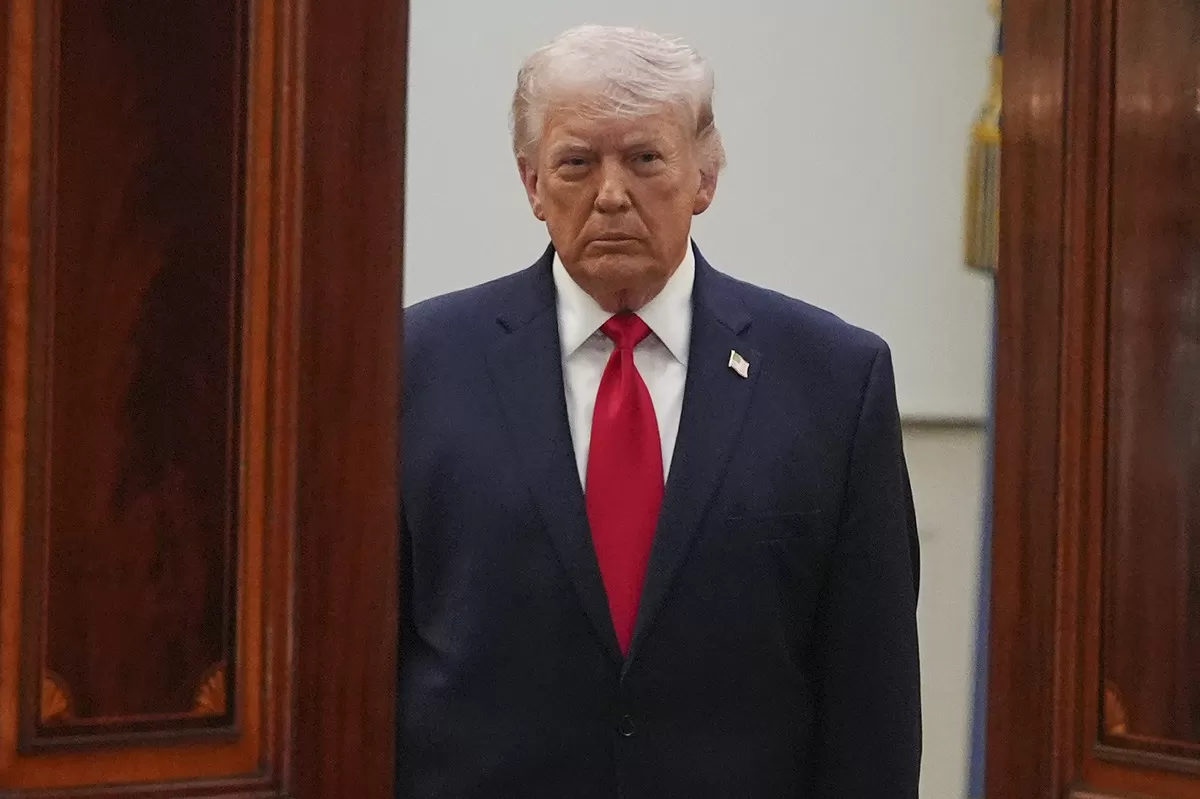
President Donald Trump’s threats have been unsuccessful in forcing Iran to reopen the vital Strait of Hormuz shipping lane. Despite his aggressive rhetoric and tough stance, the situation remains unchanged and tensions continue to rise in the region.
The Strait of Hormuz, a narrow waterway located between Iran and Oman, is one of the most important shipping lanes in the world. It is a crucial route for the transportation of oil and gas, with nearly one-fifth of the world’s oil passing through it. Any disruption in this area can have a significant impact on the global economy.
In recent months, President Trump has repeatedly threatened Iran with severe consequences if they do not comply with his demands. He has imposed harsh economic sanctions on the country, withdrawn from the Iran nuclear deal, and increased military presence in the Persian Gulf. His goal is to force Iran to reopen the Strait of Hormuz and stop their alleged support for terrorist groups in the region.
However, despite these efforts, Iran has remained defiant and has not shown any signs of backing down. In fact, they have responded to Trump’s threats with their own warnings, stating that they are fully prepared to defend their territory and will not hesitate to take action if necessary.
This stalemate has created a tense and volatile situation in the Persian Gulf, with both sides engaging in a war of words and flexing their military muscles. The risk of a potential military confrontation between the US and Iran is a cause for concern for the international community.
But why have Trump’s threats failed to achieve their desired outcome? One of the main reasons is that Iran has a strong and resilient economy, which has allowed them to withstand the impact of the US sanctions. They have also found alternative ways to transport their oil, such as using smaller tankers and covertly selling it to other countries.
Moreover, Iran has a strong support system from other countries, including Russia and China, who have continued to trade with them despite the sanctions. This has given Iran the necessary resources to resist Trump’s pressure and maintain their stance.
Additionally, Trump’s unpredictable and erratic behavior has also played a role in Iran’s defiance. His constant flip-flopping on policies and his tendency to make impulsive decisions have made it difficult for Iran to trust any negotiations or agreements with the US.
Furthermore, Trump’s aggressive approach has also alienated some of America’s key allies, who have expressed concerns about the potential consequences of a military conflict in the region. This has weakened the US’s position and made it difficult for them to garner support for their actions.
In conclusion, President Trump’s threats have been unsuccessful in forcing Iran to reopen the vital Strait of Hormuz shipping lane. Despite his efforts, Iran remains steadfast in their stance and has not shown any signs of backing down. The tension in the region continues to escalate, and the risk of a military conflict remains high.
It is essential for both sides to engage in meaningful dialogue and find a peaceful resolution to this issue. The international community must also play a role in de-escalating the situation and preventing any potential conflict. Only through cooperation and diplomacy can a lasting solution be found for the Strait of Hormuz crisis.
