
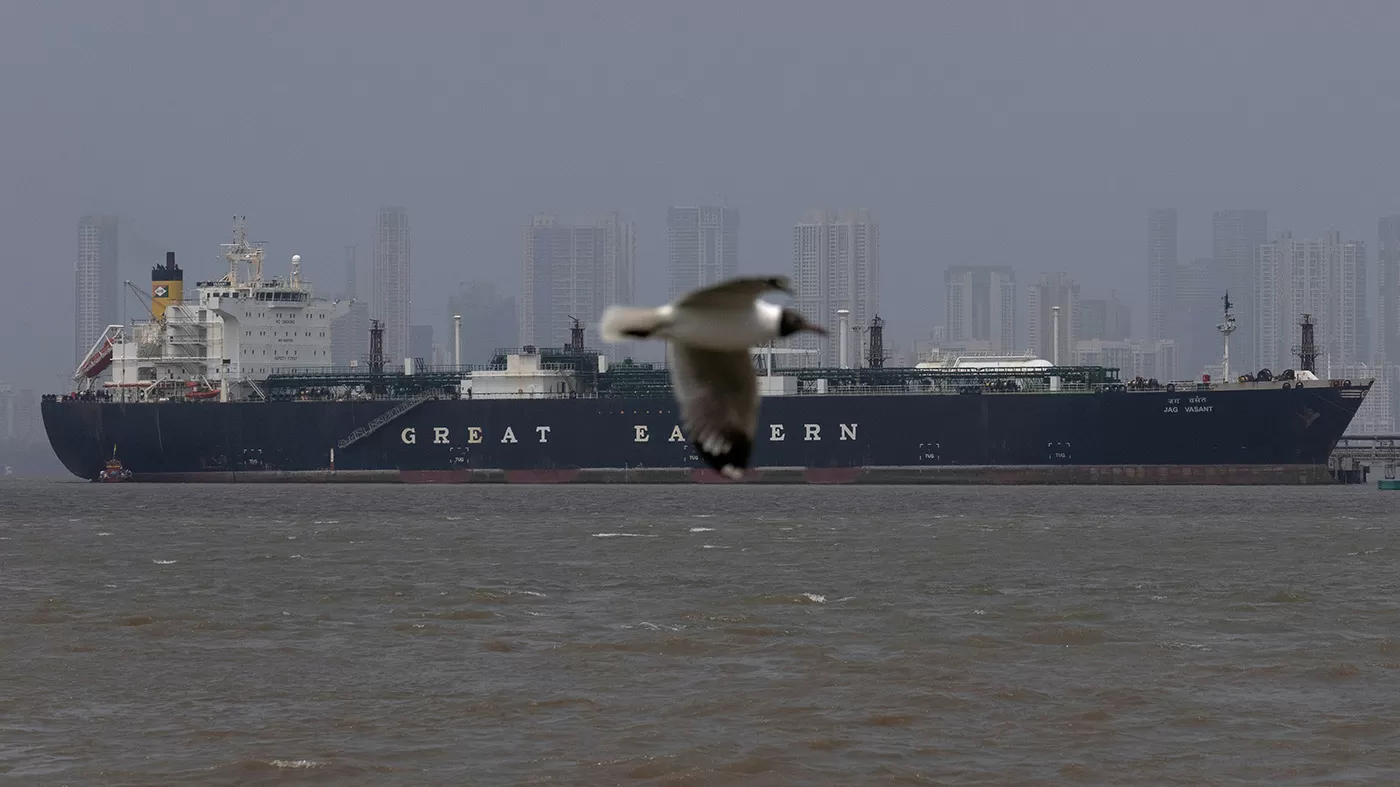
The recent tensions between the United States and Iran have once again brought attention to the strategic importance of the Strait of Hormuz. This narrow waterway, which connects the Persian Gulf to the Gulf of Oman, is a vital passage for the global oil trade. With Iran’s control of this strategic chokepoint, President Trump’s exit strategy from the Iran war has become even more complex.
In a Wednesday night address to the nation, President Trump dismissed concerns about the strait, stating that the U.S. produces enough oil to sustain itself and that other countries, particularly those more dependent on Middle Eastern oil, should take responsibility for ensuring the stability of the region. While this may seem like a bold stance, the reality is much more complicated.
Tehran’s control of the Strait of Hormuz is not just about oil. It also gives Iran leverage on the global stage and the ability to disrupt the flow of commerce in the region. With tensions high and the threat of conflict looming, the control of this waterway has become a key bargaining chip for Iran.
For President Trump, who has made it a priority to withdraw U.S. troops from the Middle East, the situation in the Strait of Hormuz presents a significant challenge. In his efforts to de-escalate tensions with Iran, he must navigate the complexities of the strait, which is controlled by a country that has been a long-time adversary of the U.S.
Moreover, the U.S. has a significant interest in the stability of the region. Along with its allies, the U.S. Navy conducts regular patrols in the Strait of Hormuz to ensure the free flow of oil and trade. Any disruption to this flow could have serious implications for the global economy, and ultimately, the United States.
The U.S. Navy’s presence in the region also serves as a deterrent against any potential attack by Iran. However, with Tehran holding the upper hand in the strait, it is becoming increasingly difficult for the U.S. to maintain its military presence in the region.
To complicate matters further, Iran has threatened to close the Strait of Hormuz if the U.S. retaliates against its recent aggressions, which include the downing of a U.S. drone and attacks on oil tankers in the Gulf of Oman. This potential disruption to the global oil trade has sparked fears of an economic crisis, with oil prices already showing volatility.
President Trump’s dismissal of concerns about the strait disregards the interconnectedness of the global economy and the U.S.’s reliance on international trade. While the U.S. may produce enough oil to sustain itself, it cannot exist in isolation. Any disruption to the global oil market would have a ripple effect on the U.S. economy.
Furthermore, other countries, particularly those in Europe and Asia, are heavily dependent on Middle Eastern oil and cannot afford to take on the responsibility of securing the Strait of Hormuz. This could lead to a situation where the U.S. is shouldering the burden of ensuring global energy security, even as it attempts to withdraw from the region.
In reality, President Trump’s simplistic view of the strait as a mere oil route ignores the complex geopolitical realities at play. Tehran’s control of this waterway gives it significant leverage in the region and the ability to dictate terms to the U.S. and its allies. The U.S. cannot afford to ignore this reality if it hopes to achieve a peaceful resolution to the ongoing tensions with Iran.
As the situation in the Middle East continues to escalate, it is crucial for all parties involved to recognize the strategic importance of the Strait of Hormuz and work towards finding a solution that ensures the free flow of oil and protects the global economy. It is also essential for the U.S. to acknowledge the limitations of its “America First” policy, and instead, work with its allies to find a sustainable and long-term solution.
In conclusion, Tehran’s control of the Strait of Hormuz is a significant complication in President Trump’s exit strategy from the Iran war. It is a complex issue that cannot be ignored or downplayed, as it has far-reaching implications for the global economy and the U.S.’s strategic interests. It is imperative for all parties to exercise restraint and engage in diplomatic efforts to find a peaceful resolution to the tensions in the region. Only through cooperation and understanding can we ensure a stable and prosperous future for all.
