
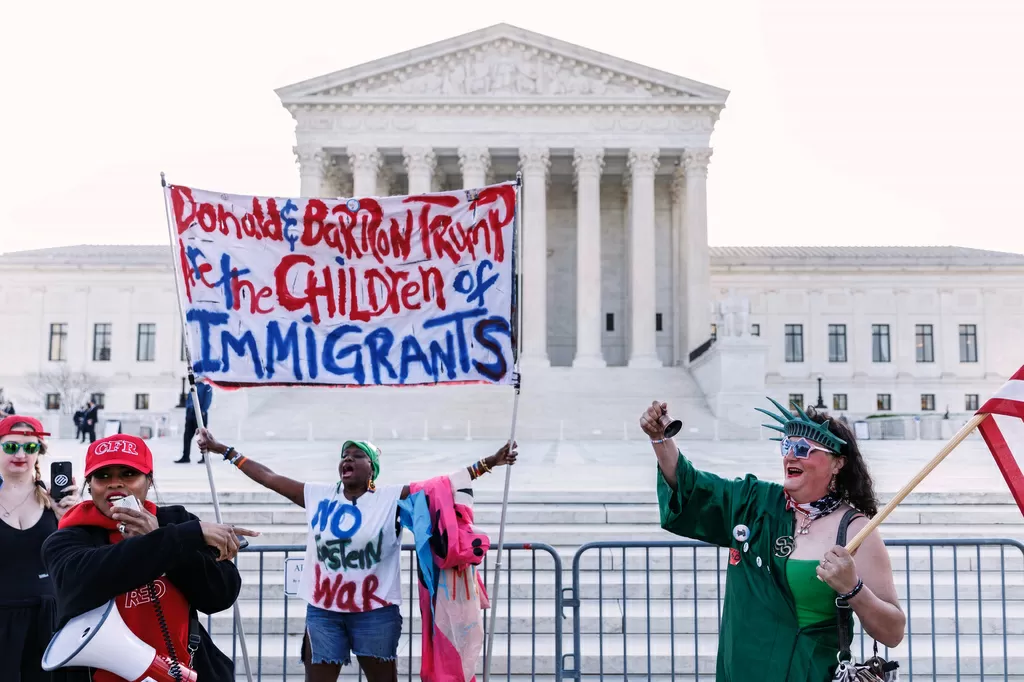
The United States is currently facing a controversial debate centered around President Trump’s executive order and its compliance with the Citizenship Clause of the Fourteenth Amendment. The Citizenship Clause, also known as the Birthright Citizenship Clause, grants citizenship to every individual born in the United States, regardless of their parent’s nationality or immigration status. This provision has been a fundamental principle of American citizenship since its ratification in 1868. However, President Trump’s recent executive order has raised questions about its validity and sparked a heated debate about the interpretation of this clause.
On October 30th, 2018, President Trump announced his intention to end birthright citizenship through an executive order. The order would require babies born on American soil to have at least one parent who is a U.S. citizen, permanent resident, or national to be considered citizens. This announcement has sparked outrage, with opponents arguing that it goes against the core principles of the Citizenship Clause and undermines the very foundation of American citizenship.
The Fourteenth Amendment was passed after the Civil War to ensure that all individuals born in the United States were granted citizenship and equal protection under the law. This amendment was specifically targeted towards African Americans, who were formerly slaves and denied citizenship. The language of the Citizenship Clause is explicit in granting citizenship to anyone born in the U.S., regardless of their parents’ status or allegiances.
One of the main arguments by proponents of the executive order is that it is aimed at preventing “birth tourism,” where individuals travel to the United States to give birth and secure citizenship for their children. However, this argument falls short as the Citizenship Clause has no stipulation regarding the circumstances of the child’s birth. It is solely based on where an individual is born, not the motivations behind the parents’ decision.
Furthermore, opponents of the executive order note that it will lead to discrimination against immigrant communities and create a system of second-class citizens. This issue is especially concerning considering the ongoing debate surrounding immigration policies and the treatment of immigrants in the U.S. The Citizenship Clause was designed to prevent such discrimination and ensure that all individuals, regardless of their heritage, are considered equal citizens of the United States.
Moreover, the legality of President Trump’s executive order has also been questioned. Many scholars and legal experts argue that it goes against the Constitution and that only a constitutional amendment or Supreme Court ruling can change the interpretation of the Citizenship Clause. Executive orders are meant to carry out existing laws, not create new ones or override provisions in the Constitution.
Additionally, critics of the executive order argue that it is a distraction from more pressing issues, such as the current administration’s handling of the COVID-19 pandemic, economic downturn, and social injustice. Instead of addressing these urgent matters, the executive order seems to be a political tool used to garner attention and push a divisive agenda.
It is worth noting that the United States is one of the few countries that grant birthright citizenship. In most countries, citizenship is based on the nationality of the child’s parents, which could create a system of inherited inequality. Our country’s birthright citizenship is a symbol of our commitment to democracy, equality, and justice for all. To tamper with this fundamental principle goes against the values that the United States prides itself on and sends a message that only certain individuals are deemed worthy of being considered true citizens.
In conclusion, the controversy surrounding President Trump’s executive order and its compliance with the Citizenship Clause of the Fourteenth Amendment is complex and multi-faceted. It raises questions about the interpretation of a fundamental aspect of American citizenship and the legality of executive orders. However, one thing is clear: the Citizenship Clause is the cornerstone of our nation’s commitment to inclusivity and equality. It is not something that should be altered or undermined by an executive order or any political agenda. Instead, we should be working towards promoting and protecting the principles of our Constitution and ensuring that all individuals born in the United States are granted the rights and privileges of American citizenship.
