
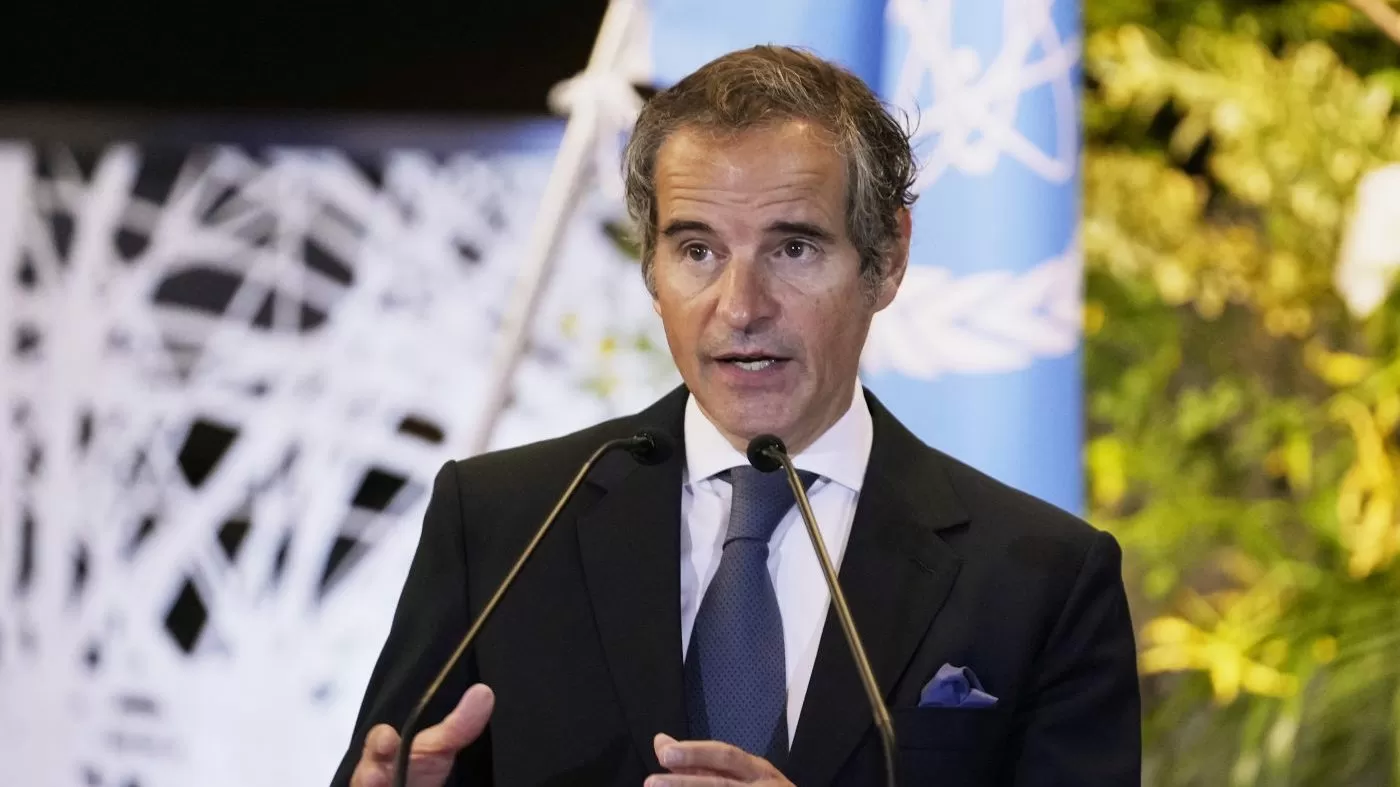
Rafael Grossi, the director general of the International Atomic Energy Agency (IAEA), has recently made a statement about the ongoing tensions between the United States, Israel, and Iran. In an interview that aired on Sunday, Grossi stated that the current U.S.-Israeli war against Iran has not caused as much damage to the country’s nuclear program as previous strikes conducted by the two nations in June.
According to Grossi, the focus of the current campaign against Iran is different from that of the previous attacks. He believes that this time, the focus is not solely on destroying Iran’s nuclear facilities, but rather on creating a crippling economic and political pressure on the country.
The IAEA director general also emphasized that the agency’s inspectors have not found any evidence of a significant change in Iran’s nuclear activities since the U.S. and Israeli strikes in June. This is a significant statement, as it contradicts the claims made by the U.S. and Israel that the attacks have severely damaged Iran’s nuclear program.
Grossi’s comments come at a time when tensions between the U.S., Israel, and Iran have reached a critical level. The U.S. and Israel have been leading a campaign against Iran, accusing the country of developing nuclear weapons and posing a threat to the region’s stability. However, Iran has repeatedly denied these accusations, stating that its nuclear program is for peaceful purposes only.
The IAEA, as the global watchdog for nuclear activities, plays a crucial role in verifying the peaceful nature of Iran’s nuclear program. Despite the ongoing tensions, the agency has continued to conduct inspections and monitor Iran’s nuclear activities, providing much-needed transparency in the situation.
Grossi’s statement about the limited impact of the U.S.-Israeli war on Iran’s nuclear program is a positive development in the current situation. It shows that the international efforts, led by the IAEA, are having a significant impact in preventing the escalation of the conflict and maintaining the peace.
Furthermore, Grossi’s comments also highlight the importance of dialogue and diplomacy in resolving conflicts. Instead of resorting to military actions, it is essential to engage in meaningful discussions and find diplomatic solutions. The IAEA, along with other international organizations, can play a crucial role in facilitating these discussions and promoting peaceful resolutions.
In light of Grossi’s statement, it is crucial for all parties involved to de-escalate the tensions and focus on finding a peaceful resolution to the conflict. The ongoing war between the U.S. and Israel against Iran has only brought destruction and suffering to the people of Iran and the region. It is time to put an end to the violence and work towards a more stable and secure future for all.
The IAEA, under the leadership of Rafael Grossi, has been at the forefront of promoting peaceful nuclear activities and preventing the spread of nuclear weapons. The agency’s efforts are commendable, and it is essential that all nations support their work in maintaining global peace and security.
In conclusion, Grossi’s statement about the limited impact of the U.S.-Israeli war on Iran’s nuclear program is a positive development in the ongoing tensions. It highlights the importance of dialogue and diplomacy in resolving conflicts and the crucial role of international organizations, such as the IAEA, in promoting peace. It is time for all parties involved to prioritize peaceful solutions and work towards a more stable and secure future for the region.
