
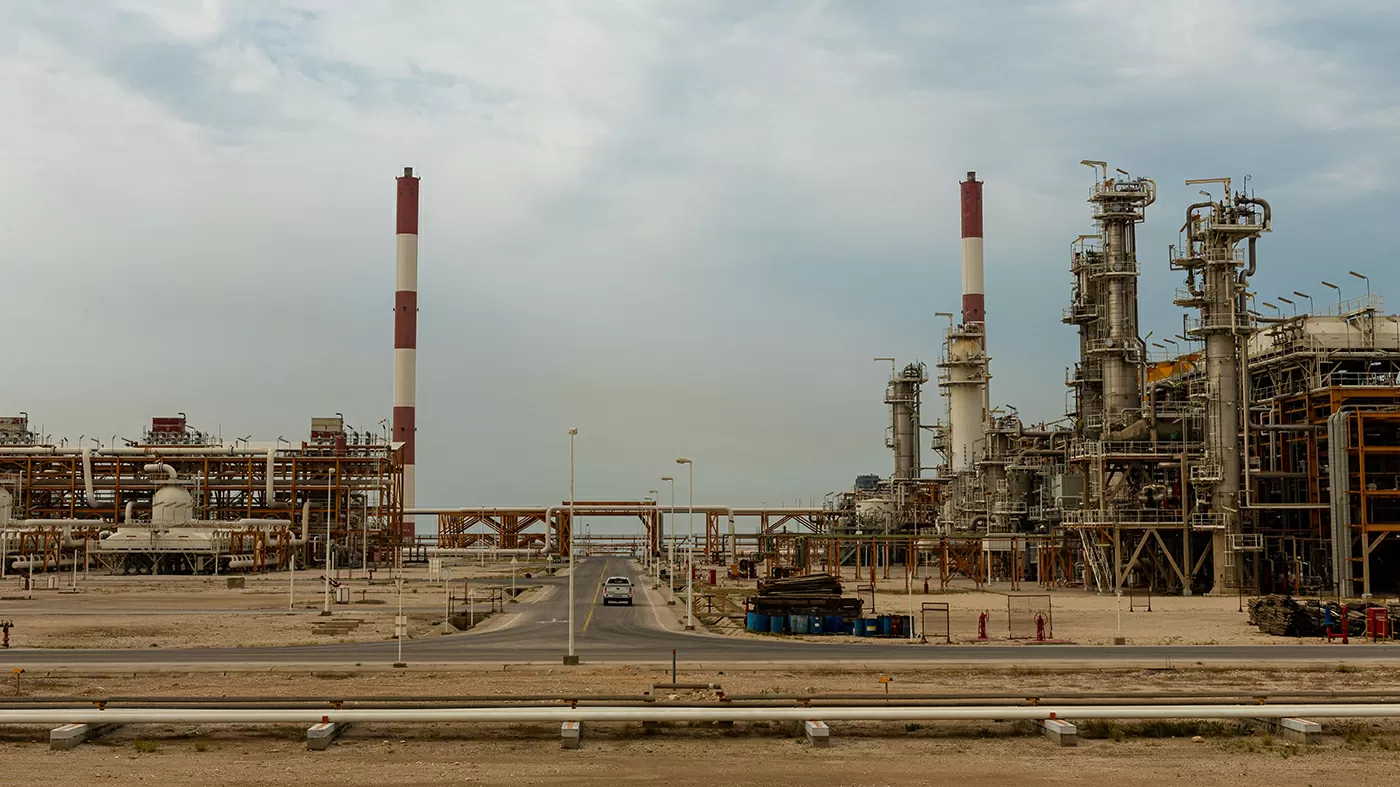
Iranian state media reported on Wednesday that facilities at the country’s South Pars natural gas field were targeted in an attack. According to The Associated Press (AP), Iranian state television and the state-run IRNA news agency reported the attack in Iran’s southern Bushehr province. While no group has claimed responsibility for the strike, Majed al-Ansari, a spokesperson for the Iranian government, pointed towards the United States and Israel as potential culprits.
The attack on South Pars, the world’s largest natural gas reserve, comes amidst escalating tensions between Iran and the US in the wake of the US withdrawal from the 2015 nuclear deal and the imposition of harsh economic sanctions. This latest incident is just one in a series of attacks on Iranian infrastructure and assets in recent months, further exacerbating the already strained relationship between the two nations.
The South Pars gas field, located in the Persian Gulf, is jointly operated by Iran and Qatar and covers an area of 3,700 square kilometers. It is responsible for producing a significant portion of Iran’s natural gas, which is crucial for the country’s energy needs and economic stability.
The Iranian government has condemned the attack, calling it a “cowardly act of sabotage” and a violation of international law. They have accused the US and Israel of carrying out the strike in an attempt to undermine Iran’s economy and destabilize the region.
The US has denied any involvement in the attack, with the State Department spokesperson, Ned Price, stating that the US “rejects any accusations of involvement in this incident.” However, the US has previously been accused of conducting cyber attacks on Iranian infrastructure, including oil and gas facilities, as part of its “maximum pressure” campaign against Iran.
Israel, on the other hand, has not explicitly commented on the attack. However, it is no secret that the country has been involved in covert operations against Iran, including the sabotage of its nuclear facilities and targeted assassinations of Iranian nuclear scientists.
The attack on South Pars has raised concerns about the security of critical energy infrastructure in the region. The Persian Gulf is home to some of the world’s largest oil and gas reserves, and any disruption in the production and distribution of these resources can have severe consequences for the global economy.
The attack on South Pars also comes at a time when Iran is preparing to hold presidential elections in June. The country is facing a multitude of challenges, including economic turmoil, political instability, and a raging pandemic. This latest incident has added to the already complex situation and could potentially impact the outcome of the elections.
Iran has vowed to retaliate against the perpetrators of the attack, with the Iranian Foreign Minister, Mohammad Javad Zarif, stating that “Iran will not leave this act of aggression unanswered.” However, it remains to be seen what form this retaliation will take and how it will further escalate tensions in the region.
The attack on South Pars is a grim reminder of the volatile and unpredictable situation in the Persian Gulf. It highlights the need for de-escalation and the urgent need for diplomatic efforts to ease tensions between Iran and the US. The international community, particularly the UN, must play a more active role in mediating and finding a peaceful resolution to the ongoing conflict.
Furthermore, this incident also demonstrates the vulnerability of critical energy infrastructure and the need for stronger security measures to protect them. The safety and stability of these facilities are crucial not only for the countries that rely on them for energy production but also for the global economy.
In conclusion, the attack on South Pars is yet another alarming development in the already tense relationship between Iran and the US. It is a clear violation of Iran’s sovereignty and a threat to regional security. The international community must take immediate action to prevent further escalation and work towards finding a peaceful solution to the ongoing conflict. The safety and security of energy infrastructure must be prioritized, and all parties involved must exercise restraint and refrain from any actions that could further destabilize the region.
