
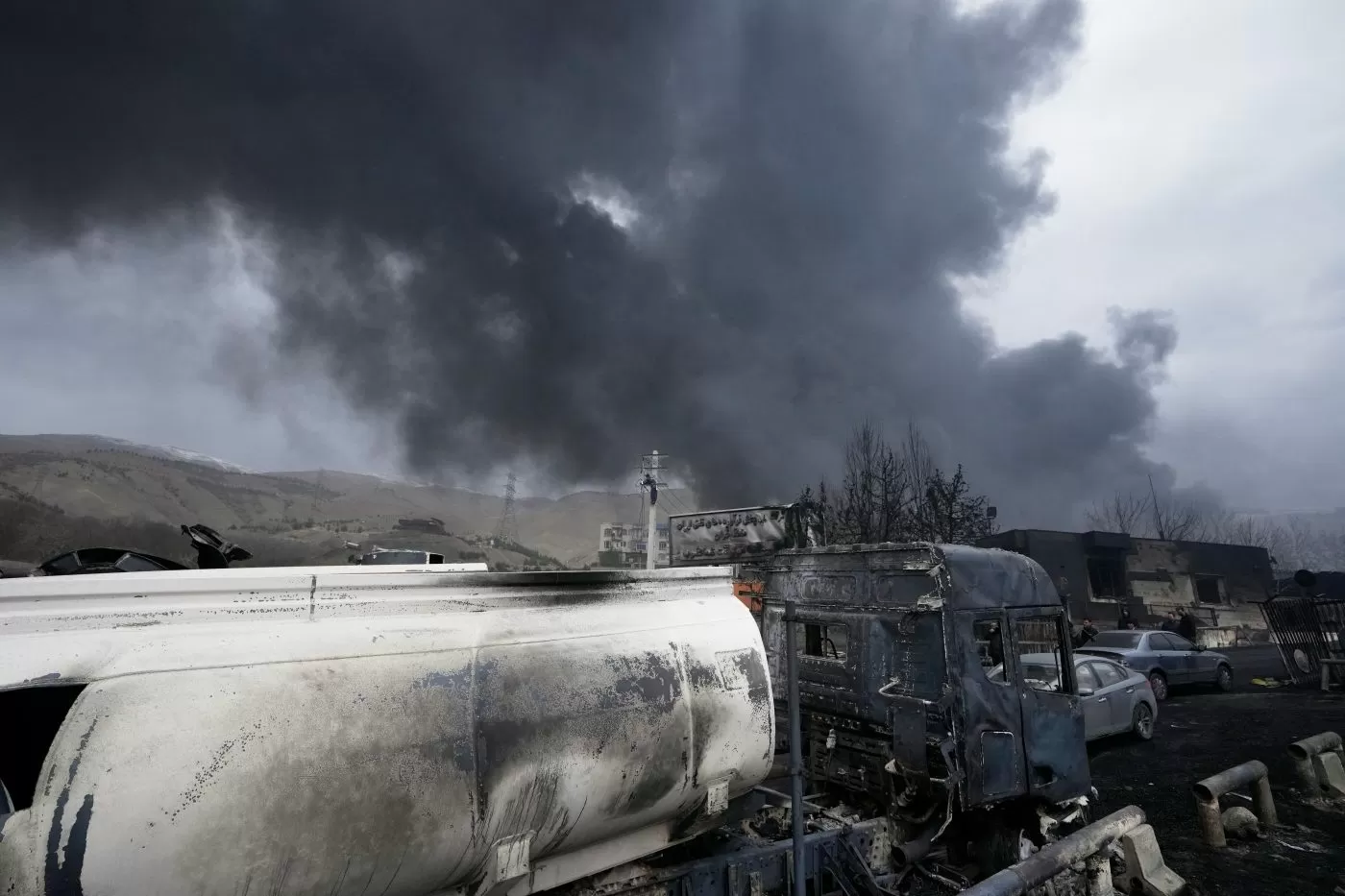
Iran’s Islamic Revolutionary Guard Corps (IRGC) has issued a warning to the world regarding the potential rise in oil prices as a result of the ongoing tensions in the Middle East. The IRGC has stated that the price of oil could reach $200 per barrel if the main pathway for exported oil, the Strait of Hormuz, remains closed due to the U.S.-Israeli military operation in Iran.
The Strait of Hormuz is a vital shipping route for oil, with nearly one-third of the world’s oil passing through it. It connects the Persian Gulf with the Gulf of Oman and is crucial for the global economy. However, tensions between the U.S. and Iran have escalated in recent months, leading to fears that the strait could be blocked as a form of retaliation.
The IRGC warned that if the strait is closed, the global oil supply would be significantly affected, leading to a sharp increase in oil prices. In a statement, the IRGC said, “Get ready for oil to be $200 a barrel, because the oil price depends on regional stability and security.” The group further emphasized that the closure of the strait would create a domino effect, impacting the entire world.
The warning from the IRGC comes at a time when tensions between the U.S. and Iran are at an all-time high. The U.S. has imposed heavy economic sanctions on Iran in an attempt to curb its nuclear program and influence in the region. Iran, on the other hand, has retaliated by threatening to disrupt the flow of oil through the Strait of Hormuz.
The recent U.S.-Israeli military operation in Iran has only added to the existing tensions. The operation, aimed at targeting Iran’s nuclear facilities, has been met with strong condemnation from the Iranian government. The IRGC has condemned the operation, calling it a “dangerous and provocative act” that could have serious consequences.
Iran has also accused Israel of being behind the operation, stating that it was carried out with the U.S.’s support. The Iranian government has vowed to retaliate against both the U.S. and Israel if the operation continues.
The warning from the IRGC is a clear indication that Iran is not backing down in the face of these threats. The group has stated that it is ready to defend the country’s interests and will not hesitate to take action if necessary. This has caused concern among oil-producing countries, as any disruption in the supply of oil would have significant economic implications.
The rise in oil prices could have a ripple effect on the global economy, impacting businesses and consumers alike. It would also put pressure on countries heavily dependent on oil imports, leading to inflation and a decrease in economic growth.
In light of these warnings, the international community must take immediate action to de-escalate the situation and prevent any further military actions. Dialogue and diplomacy must be prioritized to find a peaceful resolution to the tensions between the U.S. and Iran.
It is also crucial for countries to diversify their energy sources and reduce their reliance on oil imports. This would help mitigate the impact of a potential rise in oil prices and reduce the vulnerability of economies to geopolitical conflicts.
The IRGC’s warning serves as a wake-up call for the world to recognize the potential consequences of the ongoing tensions in the Middle East. It is imperative for all parties involved to exercise restraint and work towards finding a peaceful solution to the situation. Failure to do so could have severe repercussions for the global economy and stability in the region.
In conclusion, the IRGC’s warning about the potential rise in oil prices is a stark reminder of the consequences of the ongoing tensions in the Middle East. It is a call for action to prioritize peace and stability in the region and find a diplomatic resolution to the conflicts. The international community must come together and address these issues to prevent any further escalation and ensure the safety and well-being of all nations involved.
