
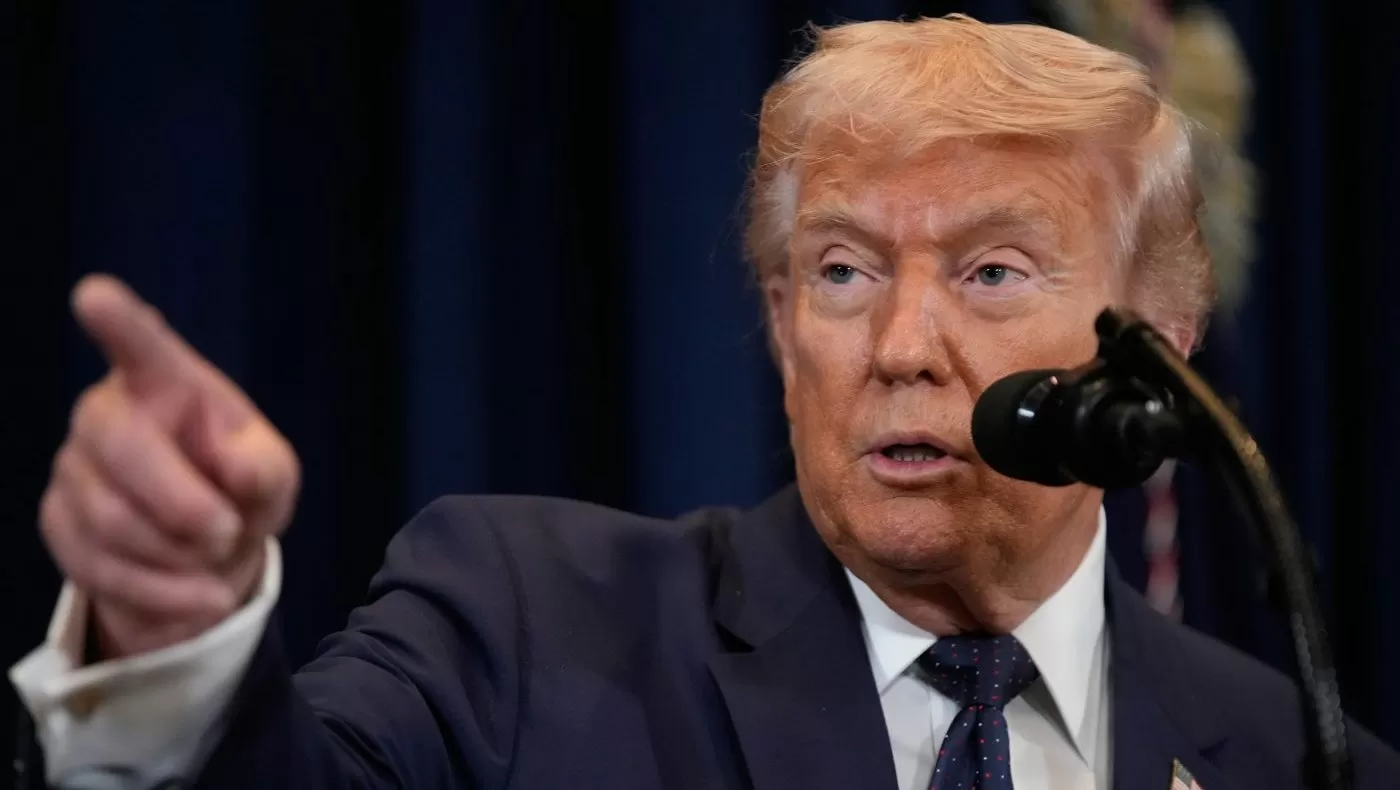
President Trump’s fiery rhetoric has once again taken center stage as he navigates through a potential oil crisis in the Strait of Hormuz. With tensions rising between the United States and Iran, Trump is betting on his bold approach to ensure the safety of one of the world’s most critical waterways. This approach includes the possibility of Navy warships escorting tankers through the Strait, or even a complete U.S. takeover. But will this strategy be enough?
The Strait of Hormuz, located between the Persian Gulf and the Gulf of Oman, is responsible for transporting about 20% of the world’s oil supply. Any disruption to this crucial route would not only have severe economic consequences but also pose a threat to global stability.
With Iran’s economy already suffering from U.S. imposed sanctions, tensions have been escalating between the two nations. Iran has repeatedly threatened to close the Strait and disrupt the flow of oil if the U.S. does not lift sanctions. In response, President Trump has made it clear that he will not back down, even going as far as threatening “fire and fury” if Iran takes any provocative actions.
Many have questioned the effectiveness of such rhetoric and whether it is a wise strategy in this delicate situation. However, President Trump’s approach has already shown some positive results. The Iranian government has backed down from their threat to close the Strait, as it would only further worsen their already struggling economy.
Despite this, the U.S. is not taking any chances and is proactively preparing for any potential disruptions. The Pentagon has announced that they are considering a plan to increase the number of U.S. forces in the region and have moved the USS Abraham Lincoln aircraft carrier strike group to the Gulf. With such military presence, any Iranian attempt to close the Strait would be met with a swift response.
Additionally, President Trump has also proposed the idea of U.S. Navy warships accompanying tankers through the Strait to ensure safe passage. This would not only deter any Iranian aggression but also provide reassurance to other countries who rely on the Strait for oil transportation.
However, the most controversial aspect of Trump’s strategy is the possibility of a U.S. takeover of the Strait of Hormuz. This would involve the deployment of U.S. forces to seize control of the area and ensure the uninterrupted flow of oil. While some argue that such a move could trigger a larger conflict, others believe that it would be a necessary step to protect vital international interests. Ultimately, this option remains a last resort and one that President Trump hopes he will not have to use.
In the meantime, the U.S. is working closely with its allies in the region, including Saudi Arabia and the United Arab Emirates, to find a diplomatic solution to the crisis. It is essential for all parties involved to come to the table and negotiate a peaceful resolution. But with Iran’s history of broken promises and aggression, President Trump is not taking any chances and is prepared to take decisive action if necessary.
Some critics may view Trump’s approach as reckless and dangerous, but it cannot be denied that his tough stance has already yielded positive results. And while the possibility of a military showdown is still a concern, President Trump is confident that his “fire and fury” rhetoric will be enough to avoid a full-blown conflict.
In conclusion, President Trump’s unwavering stance on protecting the flow of oil through the Strait of Hormuz is a necessary step in ensuring global stability. While his rhetoric may be abrasive to some, it is proving to be an effective strategy in this critical situation. Let us hope that diplomatic efforts will prevail, but rest assured that President Trump is prepared to do whatever it takes to keep the Strait open and avoid an oil crisis.
