
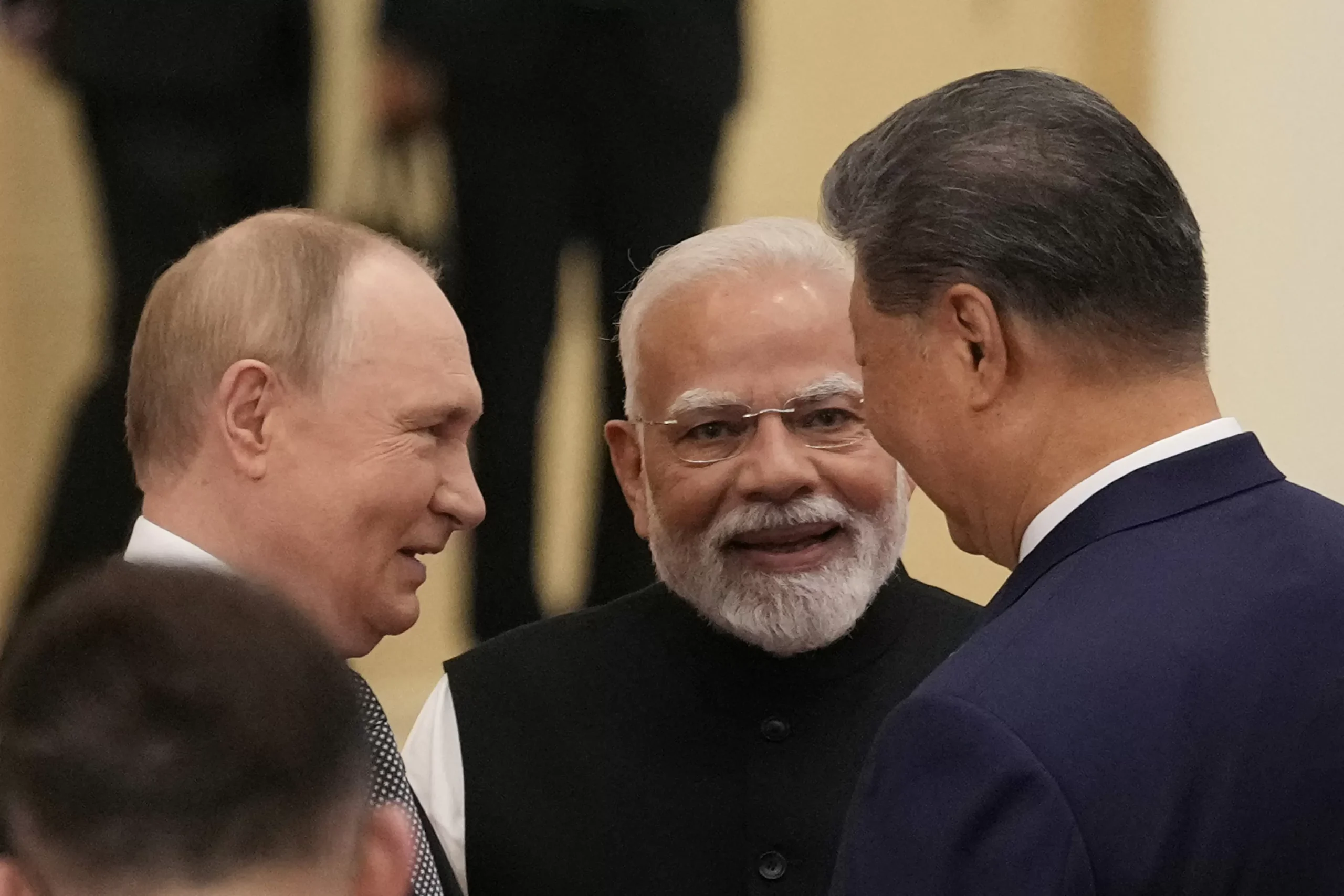
Perspective: Iran War Exposes the Fragility of the Russia-China Axis
The recent tensions between the United States and Iran have brought the issue of the Russia-China axis to the forefront of global politics. For years, these two countries have been seen as close allies, united in their opposition to American power. However, the current situation has revealed the fragility of this alliance, with both nations unable to act together against the U.S. This has raised questions about the true strength of the Russia-China axis and its ability to challenge American dominance.
It is no secret that both Russia and China have been at odds with the U.S. for some time. Both nations have been vocal critics of American foreign policy, especially in the Middle East. Russia, under the leadership of President Vladimir Putin, has been a staunch supporter of Syrian President Bashar al-Assad, while China has maintained close ties with Iran, a country that has been a thorn in the side of the U.S. for decades. Together, they have formed what many have called the Russia-China axis, a supposed alliance that was meant to counter American influence in the world.
However, the recent tensions between the U.S. and Iran have exposed the weaknesses of this alliance. Despite their shared interests in the region, Russia and China have failed to present a united front against the U.S. In fact, they have taken very different approaches to the situation, highlighting the rifts within the so-called axis.
Russia, for its part, has been relatively silent on the issue. While it has expressed concern over the escalating tensions, it has not taken any significant action to support Iran. This is in stark contrast to its actions in Syria, where it has been actively involved in supporting the Assad regime. This has led many to question the true strength of the Russia-China axis and whether Russia is truly committed to challenging American power in the Middle East.
On the other hand, China has taken a more cautious approach. It has expressed its support for Iran and has called for a peaceful resolution to the conflict. However, it has not taken any concrete steps to support Iran or challenge the U.S. This has led some to believe that China is more interested in maintaining its economic ties with the U.S. than standing up against its actions in the region.
The Iran war has also exposed the underlying tensions between Russia and China. Despite their shared interests, both nations have their own individual agendas and priorities. This has often led to conflicts of interest, and the current situation is no different. While China has been focusing on its economic ties with the U.S., Russia has been more concerned with maintaining its influence in the Middle East. This has created a divide within the axis and has weakened its ability to act together against the U.S.
Moreover, the response of other countries in the region has also shed light on the true strength of the Russia-China axis. Many countries, including traditional allies of Russia and China, have chosen to side with the U.S. in this conflict. This has further isolated the two nations and has raised doubts about their ability to rally support from other countries in the region.
It is clear that the Iran war has exposed the Russia-China axis as a loose grouping of states unable to act together against U.S. power. While both nations share a common disdain for American influence in the world, their individual interests and priorities have hindered their ability to present a united front. This has not only weakened the axis but has also brought into question its future as a significant force in global politics.
However, this does not mean that the Russia-China axis is completely irrelevant. Both nations still possess considerable military and economic power, and their alliance could still pose a threat to American dominance in the future. But for now, the Iran war has exposed the weaknesses of this alliance and has highlighted the need for stronger cooperation and unity among its members.
In conclusion, the recent tensions between the U.S. and Iran have revealed the true nature of the Russia-China axis. It is not the formidable force that many believed it to be, but rather a loose grouping of states with their own individual interests and priorities. The Iran war has exposed the fragility of this alliance, and it is up to Russia and China to address these issues and strengthen their alliance if they wish to challenge American power in the future. Until then, the Russia-China axis remains a mere concept, unable to translate into concrete action against the U.S.
