
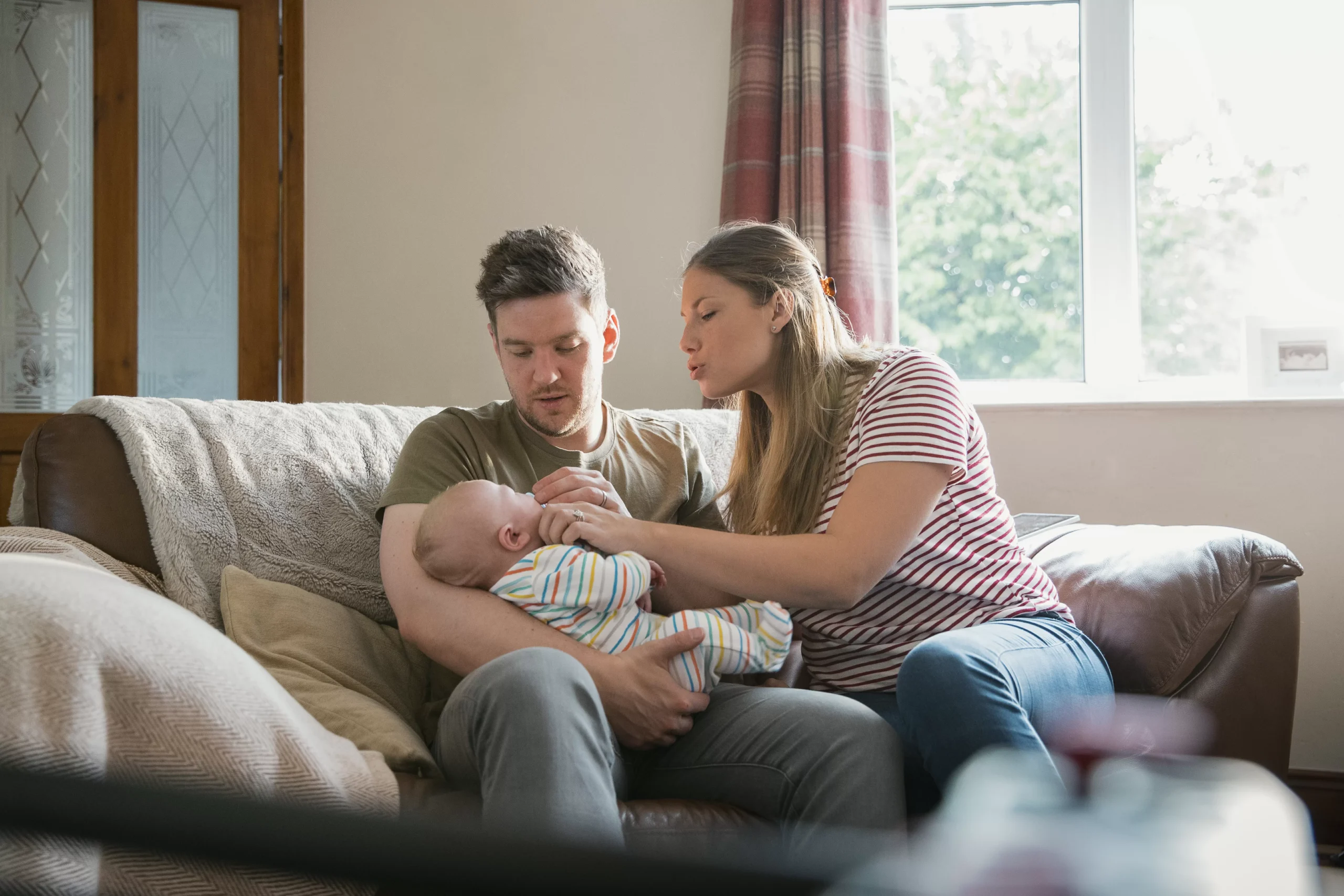
Being a new parent is a rollercoaster of emotions. From the overwhelming love for your little one to the constant worry and exhaustion, it’s a journey like no other. And while it’s a shared experience between two partners, it’s not always easy to be on the same page when it comes to parenting. This is something that many new mothers can relate to, especially when it comes to their partner’s involvement with their infant.
Recently, a mother’s frustration over her partner’s lack of effort with their infant has been making waves on social media. In a video that has gone viral, the mother can be seen laughing as her partner blames her for their baby not wanting to eat with him. While the video may have been taken in a light-hearted manner, it sheds light on a common issue that many new mothers face – the unequal distribution of parenting responsibilities.
As a new mother, it’s natural to want your partner to be just as involved in taking care of your little one as you are. After all, it takes two to make a baby, so it should take two to raise one, right? However, this is not always the case. Many mothers find themselves shouldering the majority of the responsibilities, while their partners take a backseat.
This can be frustrating for mothers, who not only have to deal with the physical and emotional demands of caring for a newborn but also the added pressure of managing their partner’s expectations. It’s not uncommon for mothers to feel like they are constantly juggling between their baby’s needs and their partner’s needs, often neglecting their own needs in the process.
In the viral video, the mother’s laughter can be seen as a coping mechanism for her frustration. It’s a way for her to deal with the fact that her partner is not taking the situation seriously and is instead blaming her for their baby’s behavior. This is a common scenario for many mothers, who often find themselves being blamed for their baby’s fussiness or refusal to eat, even though they are doing everything they can to ensure their little one is well-fed and content.
But why does this happen? Why do partners often take a backseat when it comes to parenting? The answer lies in the societal expectations and gender roles that have been ingrained in us for generations. While mothers are expected to be nurturing and caring, fathers are often seen as the breadwinners and not expected to be as hands-on with their children. This mindset needs to change.
It’s time to break free from these traditional gender roles and embrace a more equal and shared approach to parenting. Partners need to understand that raising a child is a joint responsibility and that both parents need to be actively involved in all aspects of their child’s life. This not only helps in building a stronger bond between the parents and the child but also creates a more harmonious and balanced household.
Mothers should not have to bear the burden of being the primary caregiver while their partners sit back and watch. It’s important for partners to step up and take on their fair share of responsibilities, whether it’s changing diapers, feeding the baby, or putting them to sleep. This not only helps in easing the workload for mothers but also gives fathers the opportunity to bond with their child and create special memories.
It’s also crucial for partners to communicate openly and honestly with each other. Mothers should not be afraid to express their frustrations and expectations, and partners should listen and make an effort to understand and support their partner. It’s only through effective communication that a healthy and equal partnership can be achieved.
In conclusion, the viral video of the mother’s frustration over her partner’s lack of effort with their infant may have been taken in a light-hearted manner, but it highlights a much deeper issue that needs to be addressed. It’s time to break free from traditional gender roles and embrace a more equal and shared approach to parenting. Let’s work towards creating a world where both parents are actively involved in raising their child, and mothers no longer have to shoulder the burden alone. After all, it takes two to make a baby, and it takes two to raise one.
