
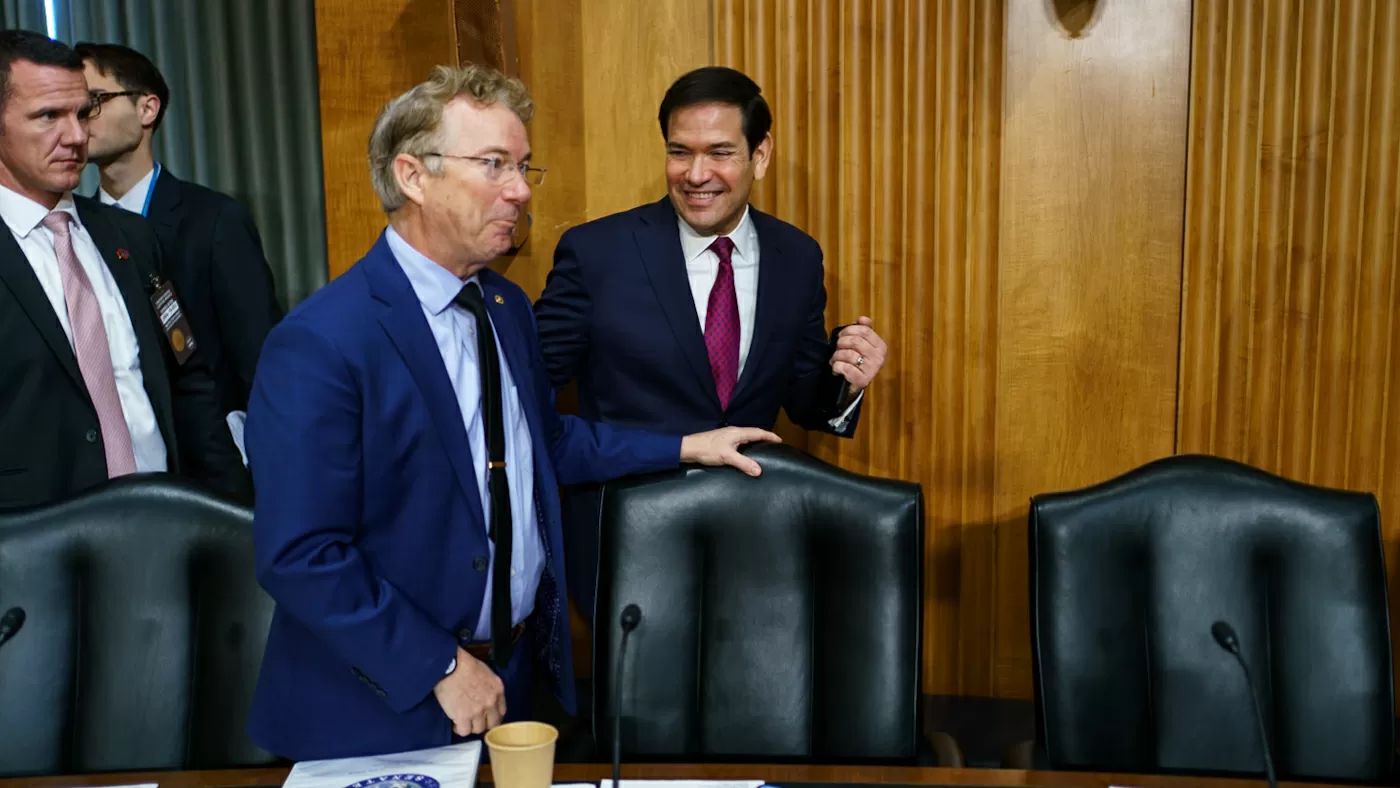
Senator Rand Paul (R-Ky.) has recently made headlines for his criticism of Secretary of State Marco Rubio’s statement regarding the U.S.’s capture of Venezuelan leader Nicolás Maduro. During a Senate Foreign Relations Committee hearing, Rubio defended the Trump administration’s decision to capture Maduro and his wife, Cilia Flores, stating that it was not an act of war. However, Senator Paul disagrees and has publicly expressed his concerns about the implications of this action.
In his testimony, Senator Rubio emphasized that the capture of Maduro was a necessary step in bringing justice to the Venezuelan people who have been suffering under his oppressive regime. He also stated that the U.S. has a responsibility to support democracy and human rights around the world, and this mission was in line with that duty. However, Senator Paul argued that this move could potentially escalate tensions and lead to further conflict in the region.
Senator Paul’s concerns are not unfounded. The U.S. has a long history of intervening in other countries’ affairs, often with disastrous consequences. In recent years, we have seen the consequences of military intervention in Iraq, Afghanistan, and Libya. Senator Paul rightly points out that the U.S. should not be quick to resort to military action, especially in a volatile region like Latin America.
Furthermore, Senator Paul raised important questions about the legality of this operation. The U.S. has not declared war on Venezuela, and Senator Paul argues that the capture of a foreign leader without a formal declaration of war could be seen as an act of aggression. This could have serious implications for our relationships with other countries and could potentially lead to retaliation.
Senator Paul’s criticism of Secretary Rubio’s statement is not an attack on the Trump administration’s policies. In fact, Senator Paul has been a vocal supporter of the administration’s efforts to bring democracy and stability to Venezuela. However, he believes that there are better ways to achieve these goals without resorting to military action.
Senator Paul’s stance on this issue is a reminder that we must carefully consider the consequences of our actions on the global stage. As a nation, we have a responsibility to promote democracy and human rights, but we must do so in a way that respects the sovereignty of other nations and avoids further conflict.
It is also important to note that Senator Paul’s criticism is not just about this specific operation. It is a reflection of his larger belief that the U.S. should not be the world’s police force. He has consistently advocated for a non-interventionist foreign policy, and his stance on the Venezuelan situation is in line with that philosophy.
In conclusion, Senator Rand Paul’s criticism of Secretary Rubio’s statement regarding the capture of Nicolás Maduro is a valuable contribution to the ongoing discussion about the U.S.’s role in the world. His concerns about the potential consequences of this action and the need for a more cautious approach are valid and should be taken into consideration. As a nation, we must strive to promote democracy and human rights, but we must also do so in a way that respects the sovereignty of other nations and avoids further conflict. Senator Paul’s words serve as a reminder that we must carefully consider the implications of our actions and work towards a more peaceful and diplomatic approach to global issues.
