
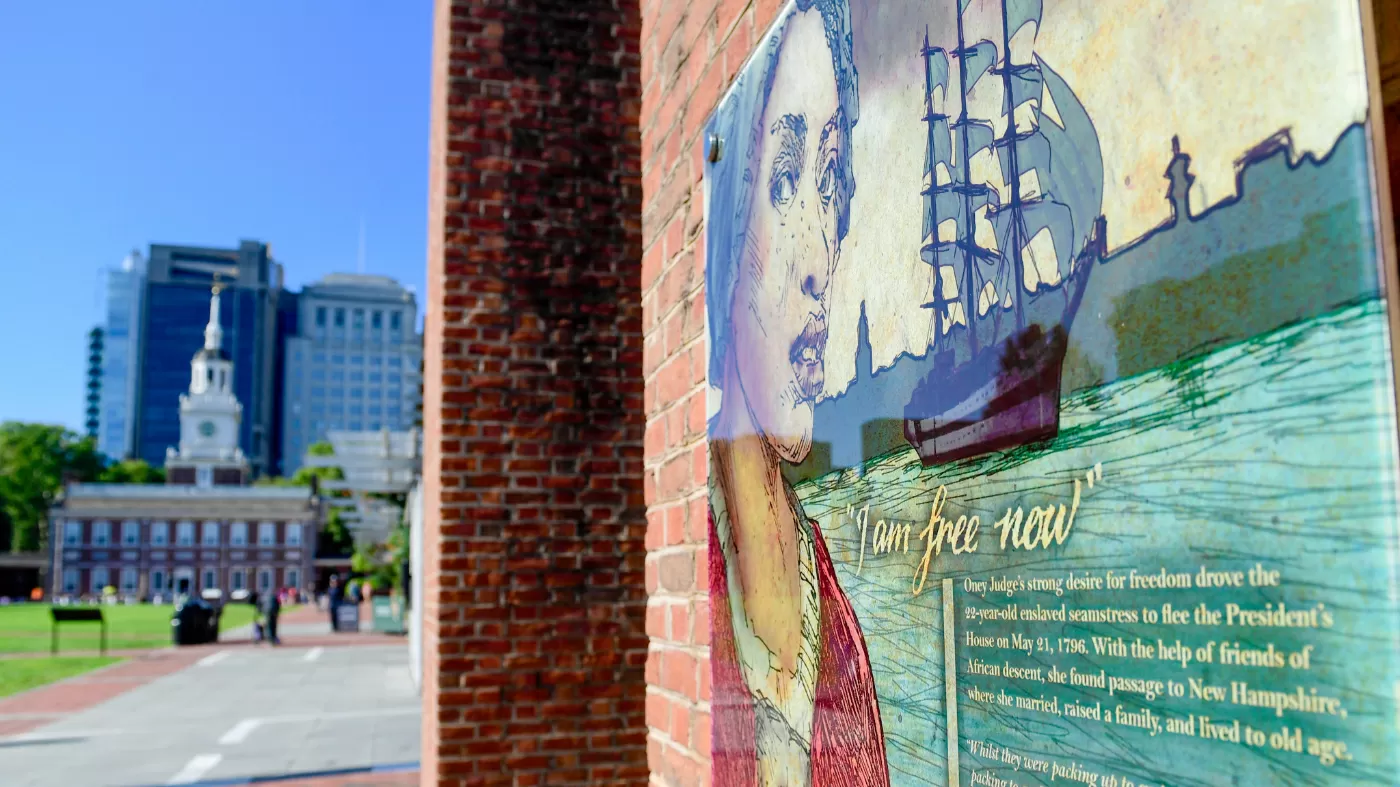
The city of Philadelphia has taken a stand against the removal of an important exhibit on slavery from the President’s House site in Independence National Historical Park. On Thursday, the city filed a lawsuit against the Department of the Interior, seeking a preliminary injunction to keep the displays up.
The exhibit, which was dedicated to telling the story of the enslaved people who lived and worked in the President’s House during George Washington’s presidency, was abruptly removed by National Park Service staff without any notice. This action has sparked outrage and disappointment among the citizens of Philadelphia, who see this as a blatant disregard for the city’s history and the importance of acknowledging the painful legacy of slavery.
The lawsuit filed by the city states that the exhibit was removed “without notice” and “presumably pursuant” to a decision made by the Department of the Interior. This decision has been met with strong opposition from the city, which believes that the removal of the exhibit goes against the values of inclusivity and diversity that Philadelphia stands for.
The President’s House site, located within Independence National Historical Park, holds great significance in American history. It was the home of George Washington during his presidency and also served as the residence for nine enslaved Africans who were owned by the Washingtons. The exhibit, which was installed in 2010, aimed to shed light on the lives of these enslaved individuals and their contributions to the building of the nation.
The sudden removal of the exhibit has caused an uproar in the community, with many questioning the motives behind this decision. The city of Philadelphia, in its lawsuit, has raised concerns about the lack of transparency and communication from the Department of the Interior regarding the removal of the exhibit. This has left many wondering if there is a larger agenda at play.
The city’s lawsuit also highlights the importance of preserving and honoring the history of all individuals who have contributed to the growth and development of the United States. The removal of the exhibit not only erases the stories of the enslaved people who lived in the President’s House, but it also diminishes the significance of their struggles and sacrifices.
The city of Philadelphia has always been at the forefront of promoting diversity and inclusivity. It is a city that takes pride in its rich history and strives to educate its citizens about the past. The removal of the exhibit goes against these values and sends a message that the city is not committed to acknowledging the painful realities of its past.
The citizens of Philadelphia are standing in solidarity with the city’s decision to file a lawsuit against the Department of the Interior. They believe that the exhibit should be reinstated and that the city’s history should be preserved for future generations to learn from. The removal of the exhibit is not just a loss for the city, but for the entire nation.
In a time where racial tensions and social injustices are at the forefront of national conversations, it is crucial to have spaces like the President’s House exhibit that educate and promote understanding. The city of Philadelphia is determined to fight for the reinstatement of the exhibit and to continue honoring the stories of those who have been marginalized and oppressed.
The lawsuit filed by the city is a powerful statement that sends a clear message that the citizens of Philadelphia will not stand for the erasure of their history. It is a call to action for the Department of the Interior to reconsider their decision and to work towards preserving the important stories that the exhibit represents.
In conclusion, the city of Philadelphia’s decision to sue the Department of the Interior is a bold and necessary step in the fight to preserve the history of the President’s House site. It is a reminder that the city will not back down when it comes to protecting its values and honoring the contributions of all individuals, regardless of their race or background. The citizens of Philadelphia stand united in their support for the reinstatement of the exhibit and the preservation of their city’s history.
