
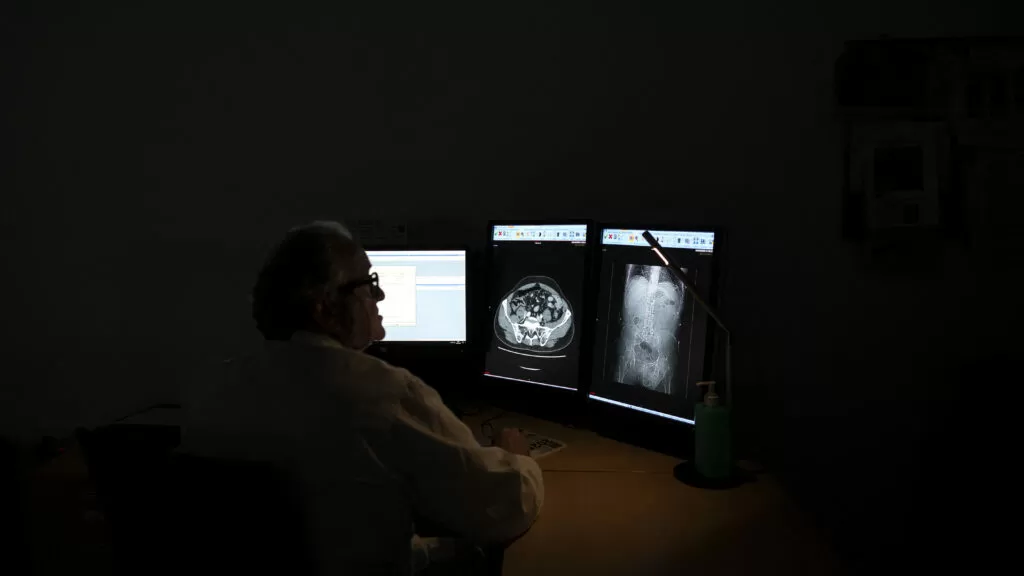
Artificial intelligence (AI) has become a game changer in the field of radiology, as the demand for imaging services continues to grow while the number of qualified radiologists remains limited. This has led to a significant increase in the use of AI technology in radiology, providing a much-needed solution to the staffing shortages that have been plaguing the industry.
The use of AI in radiology has exploded in recent years, and for good reason. With the advancements in technology, AI has proven to be a valuable tool in improving the accuracy and efficiency of radiological diagnoses. It has the ability to analyze large amounts of data in a fraction of the time it would take a human, making it an invaluable asset in the fast-paced world of radiology.
One of the main reasons for the growing use of AI in radiology is the shortage of qualified radiologists. According to a recent study by the American College of Radiology, there is a projected shortage of 9,000 radiologists in the United States by 2033. This is due to a combination of factors, including an aging population, an increase in chronic diseases, and a limited number of radiology residency positions. As a result, radiologists are facing a heavy workload, which can lead to burnout and a decrease in the quality of patient care.
The shortage of radiologists has been further exacerbated by the growing demand for imaging services. With the rise in chronic diseases, there has been a significant increase in the number of imaging studies being performed. This has put a strain on radiologists, who are already facing a shortage of staff. As a result, patients may experience longer wait times for their results, which can have a negative impact on their overall healthcare experience.
This is where AI comes in. By utilizing AI technology, radiologists can streamline their workflow and improve their efficiency. AI algorithms can analyze medical images and provide accurate and timely diagnoses, reducing the burden on radiologists and allowing them to focus on more complex cases. This not only improves the speed and accuracy of diagnoses but also frees up time for radiologists to spend on patient care and consultation.
Moreover, AI technology can also assist in detecting abnormalities that may be missed by human eyes. This can be especially beneficial in cases where the abnormality is subtle or in areas that are difficult to access. By working in tandem with radiologists, AI can help improve the overall accuracy of diagnoses and reduce the chances of misdiagnosis.
Another advantage of AI in radiology is its ability to learn and adapt. As more data is fed into the system, the algorithms can continuously improve and become more accurate. This means that over time, AI technology will become an even more valuable tool for radiologists, providing them with a reliable and efficient way to handle the growing volume of imaging studies.
The use of AI in radiology is not without its challenges. One of the main concerns is the fear that AI technology will replace radiologists. However, this is not the case. AI is meant to assist and enhance the work of radiologists, not replace them. It can help radiologists work more efficiently and effectively, allowing them to focus on more complex cases and provide better patient care.
Furthermore, the use of AI in radiology also raises concerns about patient privacy and data security. However, strict regulations and protocols are in place to ensure that patient data is protected and used ethically. Radiologists and AI developers must adhere to these regulations to maintain patient trust and confidence in the technology.
In conclusion, the use of AI in radiology has exploded in recent years, and for good reason. It has become an essential tool in addressing the staffing shortages that have been plaguing the industry. By streamlining workflow, improving efficiency, and enhancing accuracy, AI technology is revolutionizing the field of radiology. As the technology continues to evolve and improve, it will undoubtedly play a crucial role in the future of radiology, providing radiologists with the support they need to provide the best possible care to their patients.
