
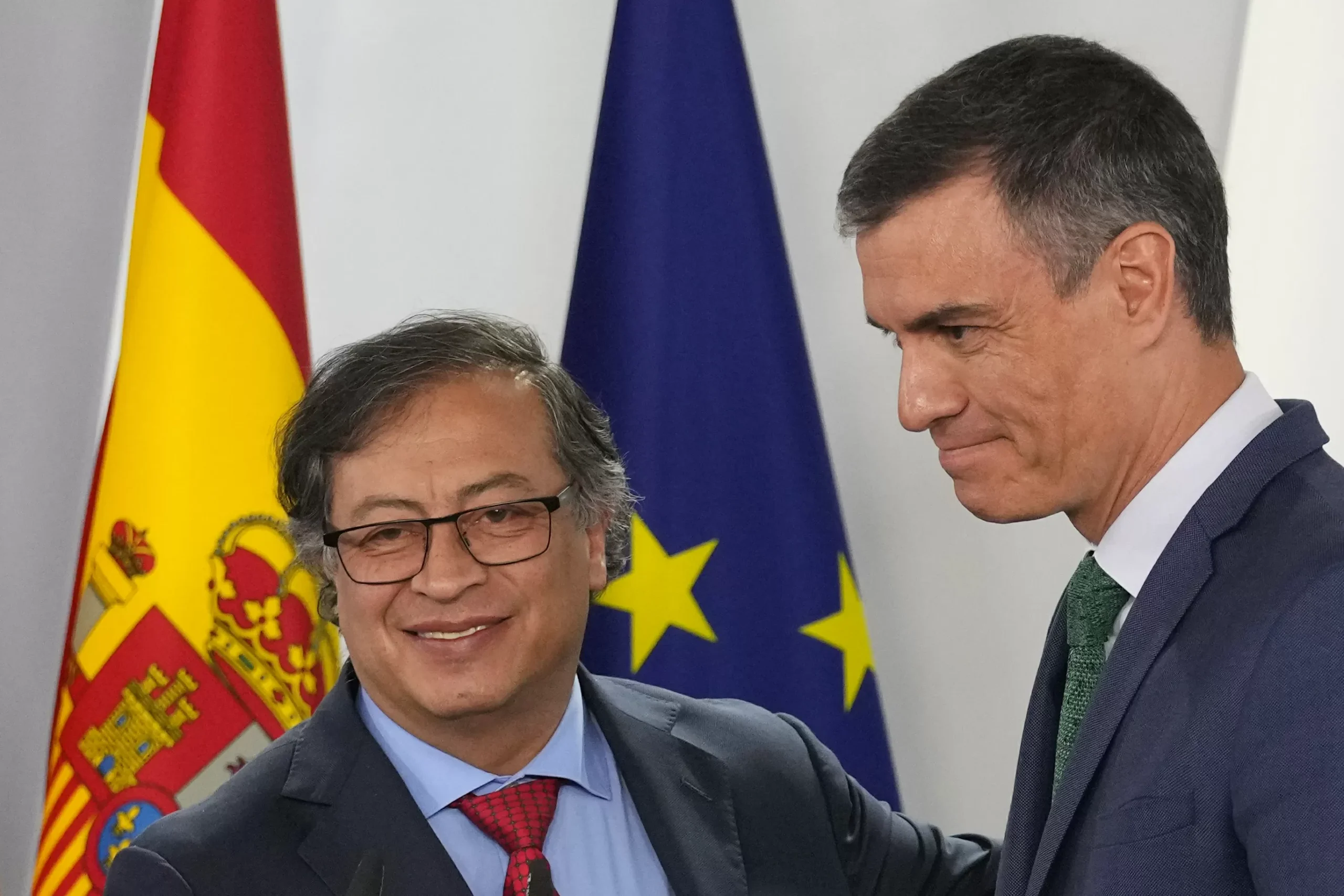
Colombian President Gustavo Petro recently sat down for an interview with CNN, where he shared his thoughts on the current situation in Venezuela and the role of the Trump administration. He revealed that, contrary to what many believe, the main motivation behind the United States’ actions in the region is not the fight against narcotics, but rather the rich oil reserves found in Venezuela.
According to President Petro, “oil is at the heart of the matter” when it comes to the US pressure campaign in Venezuela. These words hold significant weight, coming from a leader who has firsthand experience with the complexities of the oil industry and its impact on national politics.
Petro went on to assert that the Trump administration’s policies towards Venezuela are not based on humanitarian concerns or supporting democracy, but rather on securing control over the country’s vast oil reserves. He stated, “So, that’s a negotiation about oil. I believe that is…”. President Petro’s statement highlights the underlying motive behind the US’ interference in Venezuela’s political and economic affairs.
The current crisis in Venezuela has been characterized by political turmoil, economic instability, and widespread humanitarian issues. In recent years, the country has witnessed a sharp decline in its oil production, which has severely impacted its economy. For a country heavily reliant on oil exports, this has been a major blow. However, Venezuela still holds the largest oil reserves in the world, making it a highly coveted asset for global powers like the United States.
President Petro’s bold statement sheds light on the real intentions of the US, which has imposed severe economic sanctions on Venezuela in an attempt to overthrow its government and gain control over its oil reserves. These sanctions have had devastating effects on the Venezuelan people, causing shortages of essential goods and worsening the country’s economic crisis. It is clear that the Trump administration is using its power to manipulate and exploit the situation in Venezuela for its own gain, at the cost of innocent lives.
In response to the interview, the Venezuelan government has condemned the US’ actions and called for solidarity from other Latin American countries. President Petro emphasized that Colombia, as a neighboring country, should play a crucial role in finding a peaceful solution to the crisis in Venezuela. He stated, “Colombia has to accompany the way to democracy. It cannot enter into a war dynamic.” His words echo the sentiments of many who believe that a peaceful and diplomatic approach is the only way to resolve the issues in Venezuela.
Furthermore, President Petro’s comments highlight the need for transparency and accountability in global politics. The use of economic and political power to exploit natural resources in developing countries is not only immoral but also goes against the principles of fairness and justice. It is time for world leaders to prioritize the well-being of their people over their own interests and agendas.
It is also essential for countries like Colombia, who share a strong economic and political relationship with the United States, to speak out against these unjust actions. As a nation that has dealt with its own struggles and challenges, Colombia must use its past experiences to help find a peaceful resolution to the crisis in Venezuela.
In conclusion, President Petro’s interview has brought to light the true intentions behind the Trump administration’s pressure campaign in Venezuela. The fight for control over the country’s vast oil reserves has taken precedence over the well-being and rights of the Venezuelan people. It is time for world leaders to put aside their selfish interests and work towards finding a humane and diplomatic solution to the crisis. As for Colombia, it must stand in solidarity with its neighbor and use its influence to bring peace, stability, and democracy to the region.
