
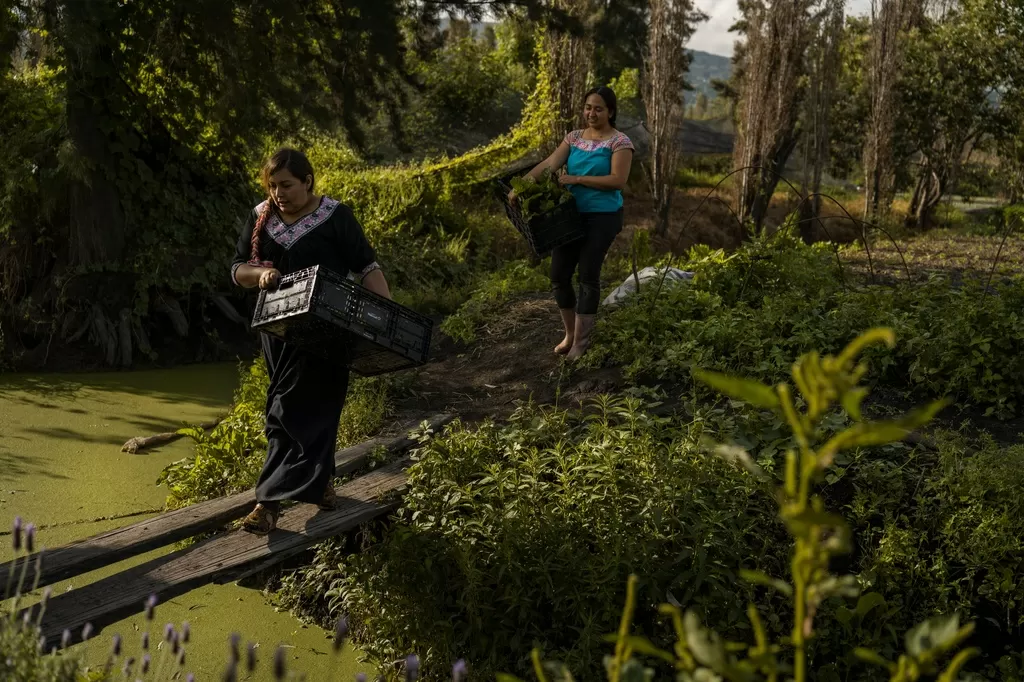
Making Their Mark: Women Breaking Barriers in Xochimilco and San Gregorio Atlapulco
In the picturesque boroughs of Xochimilco and San Gregorio Atlapulco, located in the southern part of Mexico City, lies a unique farming system known as chinampas. These floating gardens, dating back to the Aztec civilization, have been a source of livelihood for generations of families in the area. However, one thing that has remained constant is the dominance of men in this field. But that is slowly changing as more and more women are making their way into this traditionally male-dominated industry.
For centuries, the chinampas have been passed down from father to son, with women playing a supporting role in the background. But in recent years, a new generation of women has emerged, determined to break the barriers and make their mark in this male-dominated world. These women are challenging the status quo and proving that they are just as capable, if not more, of working the land and providing for their families.
One such woman is Maria, a 35-year-old mother of three, who has been working on the chinampas for the past five years. She recalls how difficult it was for her to convince her family to let her work on the land. “My father and brothers were not supportive at first. They believed that farming was a man’s job and that I should stay at home and take care of the household. But I was determined to prove them wrong,” she says with a smile.
Maria’s determination paid off, and today she is one of the most successful farmers in the area. She has not only managed to provide for her family but has also become a role model for other women in the community. “I want to show other women that they are capable of doing anything they set their minds to. We are just as strong and hardworking as men, and we deserve equal opportunities,” she adds.
Maria’s story is not unique. Many other women in Xochimilco and San Gregorio Atlapulco have similar tales of perseverance and determination. These women are not only working the land but are also taking on leadership roles in their communities. They are organizing workshops and training sessions to educate other women on farming techniques and sustainable practices. They are also advocating for their rights and demanding equal pay for their work.
The impact of these women’s efforts is evident in the changing landscape of the chinampas. More and more women can be seen tending to the crops, harvesting vegetables, and even operating the traditional trajineras (flat-bottomed boats used for transportation in the canals). This shift in the gender dynamics of the chinampas has not only brought about economic empowerment for women but has also led to a more diverse and inclusive community.
However, it hasn’t been an easy journey for these women. They have faced numerous challenges, including societal norms, lack of support from their families, and limited access to resources and education. But they have not let these obstacles deter them from their goals. Instead, they have used them as motivation to work harder and prove their worth.
The local government has also recognized the contributions of these women and has taken steps to support and empower them. The Ministry of Agriculture has launched programs to provide training and resources to women farmers, and the local authorities have implemented policies to ensure equal pay for men and women working on the chinampas.
The success of these women has not only brought about a positive change in their own lives but has also had a ripple effect on the entire community. The traditional gender roles are slowly breaking down, and women are being seen as equals in the workforce. This shift in mindset is crucial in creating a more inclusive and progressive society.
As we celebrate International Women’s Day, it is essential to recognize and applaud the efforts of these women who are breaking barriers and making their way in a field that was once dominated by men. Their determination, resilience, and hard work are an inspiration to us all. They are not just working the land; they are paving the way for a more equal and just society.
In conclusion, the chinampas of Xochimilco and San Gregorio Atlapulco may have been a male-dominated industry for centuries, but the winds of change are blowing, and women are making their mark. These women are not just farming; they are breaking barriers, challenging stereotypes, and creating a more inclusive and equal society
