
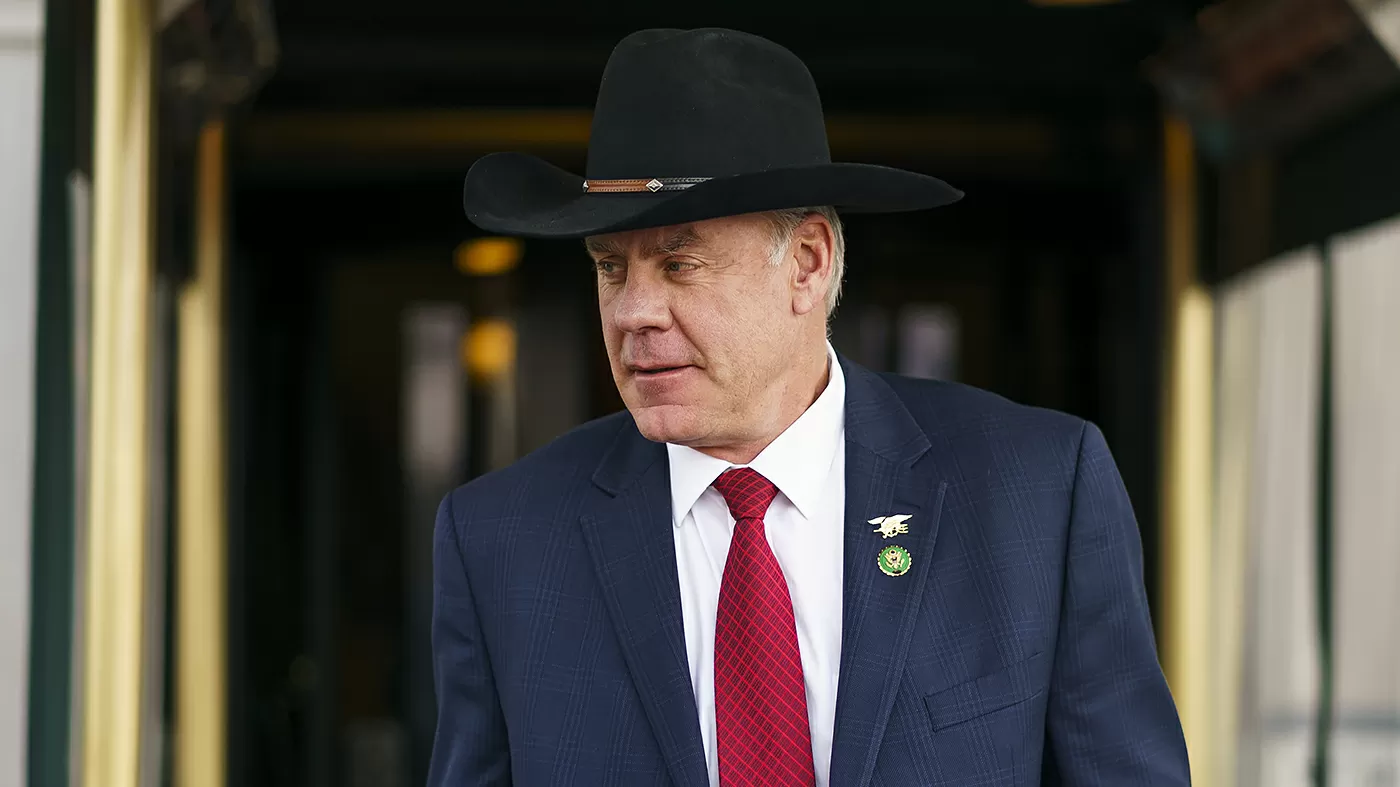
Rep. Ryan Zinke (R-Mont.) has taken a bold stance against the sale of public lands as outlined in the budget reconciliation package. On Wednesday, he made it clear that he is firmly against the provision in the House Natural Resources Committee’s portion of the massive spending bill, which includes an amendment to put federal acreage up for sale in Utah and Nevada.
“It’s a no now. And it will be a no later,” stated Rep. Zinke, emphasizing his unwavering stance on the matter. This comes as a reassuring message to those who value the preservation of public lands and the protection of our natural resources.
The proposed sale of public lands has been a contentious issue, drawing criticism from both sides of the political spectrum. Many have expressed concerns about the potential impact on the environment, as well as the loss of access to these lands for recreational activities such as hiking, camping, and hunting.
Rep. Zinke’s opposition to the sale of public lands is not only a reflection of his commitment to preserving our natural heritage, but also a demonstration of his dedication to representing the interests of his constituents in Montana. As a state known for its stunning landscapes and rich biodiversity, the sale of public lands would have a significant impact on the people and economy of Montana.
In his statement, Rep. Zinke also highlighted the importance of responsible land management and the need to find alternative solutions to address budgetary concerns. “We need to look at other ways to balance the budget without sacrificing our public lands,” he said. This sentiment is shared by many who believe that there are more sustainable and responsible ways to address budget deficits without resorting to the sale of public lands.
The amendment to sell federal acreage in Utah and Nevada was included in the budget reconciliation package as a means to generate revenue. However, the potential short-term gains from the sale of these lands pale in comparison to the long-term benefits of preserving them for future generations. In addition, the sale of public lands would also mean losing control over these lands and potentially opening them up to development and exploitation.
Rep. Zinke’s opposition to the sale of public lands is a clear indication that he understands the value of these lands and the need to protect them for the benefit of all Americans. His stance is not only commendable, but it also sets an example for other lawmakers to prioritize the preservation of our natural resources over short-term financial gains.
Furthermore, Rep. Zinke’s position on the issue sends a strong message to the House Natural Resources Committee and the rest of Congress that the sale of public lands is not a viable solution. It is time for our leaders to come together and find more sustainable ways to address budget deficits that do not involve sacrificing our natural heritage.
In conclusion, Rep. Ryan Zinke’s opposition to the sale of public lands is a testament to his commitment to protecting our environment and preserving our natural resources. His unwavering stance on the issue is a ray of hope for those who value the beauty and diversity of our public lands. Let us hope that his colleagues in Congress will follow his lead and work towards finding responsible solutions to address budgetary concerns without compromising our natural heritage.
