
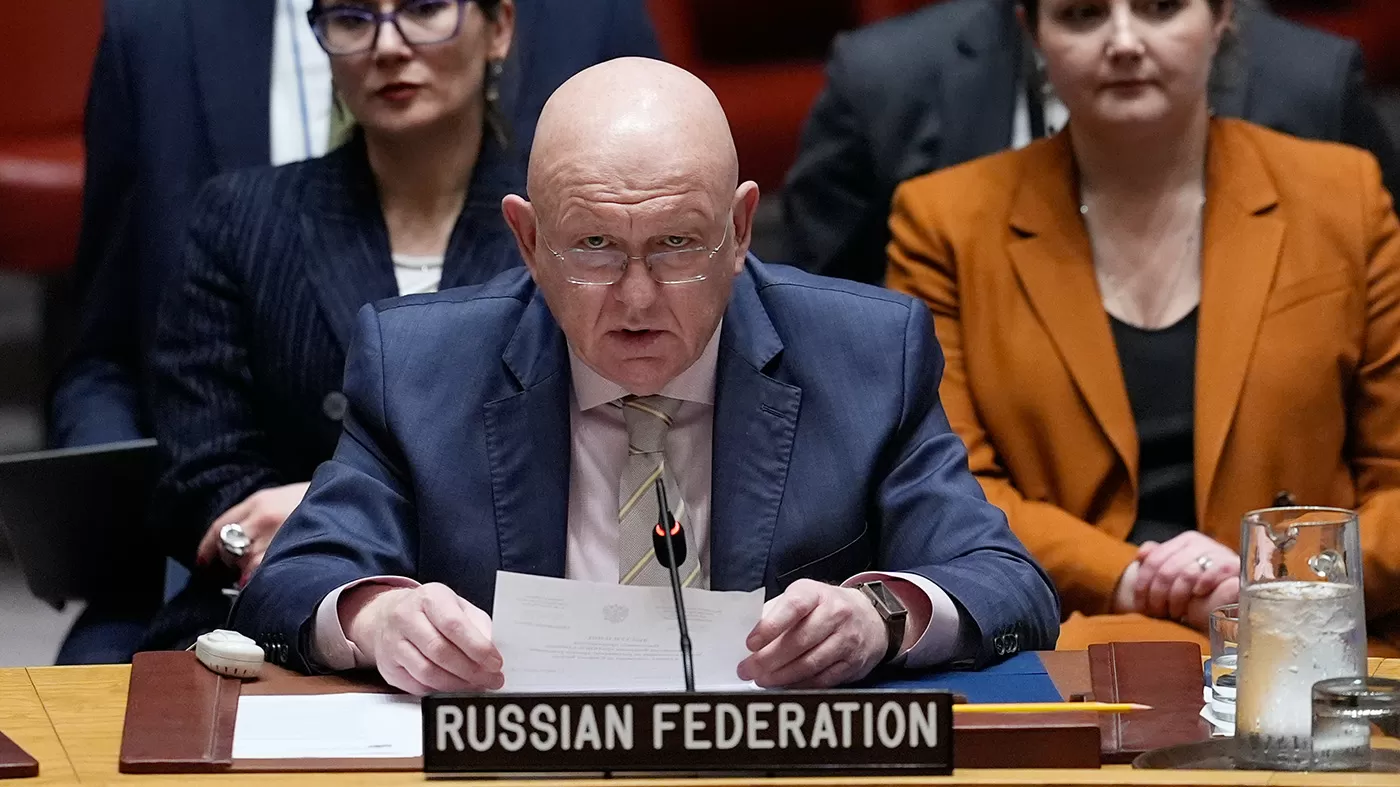
The Strait of Hormuz, a vital waterway for global oil transportation, has been at the center of international tensions in recent years. On Tuesday, a Bahrain-led resolution aimed at reopening the strait failed to pass at the United Nations, despite efforts to gain support from Russia and China. The resolution, which aimed to find a peaceful solution to the ongoing crisis in the region, was unable to withstand the opposition from these two major players.
The resolution was sponsored by the Kingdom of Bahrain, a small but influential country in the Middle East. Along with Bahrain, ten other nations – Democratic Republic of Congo, Denmark, France, Greece, Latvia, Liberia, Panama, Somalia, United Kingdom and – came together to draft the resolution. The goal was to address the ongoing tensions in the Strait of Hormuz and find a solution that would benefit all parties involved.
The resolution aimed at reopening the Strait of Hormuz, a narrow waterway that connects the Persian Gulf to the Arabian Sea, which has been a global trade route for centuries. In recent years, the strait has become a flashpoint for tensions between Iran, which controls the northern coastline, and other countries in the region. The United States, in particular, has accused Iran of threatening the safety of commercial shipping in the strait, leading to heightened tensions and fears of a potential conflict.
However, despite the efforts of Bahrain and other nations to find a peaceful solution, the resolution failed to pass at the United Nations. This was due to strong opposition from Russia and China, who have close ties with Iran. These countries argued that the resolution was too biased and did not address the root cause of the tensions in the strait.
In an attempt to gain their support, Bahrain and other nations involved in drafting the resolution had made amendments to weaken its provisions. The final version of the resolution aimed to focus on promoting dialogue and cooperation between all countries involved in the region, instead of placing the blame on one particular party. Despite these efforts, the opposition from Russia and China proved to be too strong.
The failure of the resolution at the United Nations is undoubtedly a setback for Bahrain and the other sponsoring nations. However, their efforts should still be commended. The fact that these countries came together to address a critical issue in the region, and work towards finding a peaceful solution, is commendable. Their determination and willingness to engage in dialogue and cooperation should serve as an example to other nations involved in the region.
The Strait of Hormuz remains a vital waterway for global trade, and it is in everyone’s best interest to maintain its safety and security. While the resolution may have failed at the United Nations, it is crucial that all countries involved continue to work towards finding a lasting solution to the tensions in the region.
Bahrain, in particular, has shown great leadership in taking the initiative to draft the resolution and bring together other nations to address this issue. As a small country, Bahrain has proven that it can play a significant role in promoting peace and stability in the region. The efforts of Bahrain and the other sponsoring nations should not go in vain. They have set a positive example and shown that dialogue and collaboration are the keys to finding a peaceful solution.
In conclusion, the failure of the Bahrain-led resolution at the United Nations may be a disappointment, but it should not deter the efforts of all nations involved in finding a solution to the tensions in the Strait of Hormuz. The ongoing crisis in the region needs to be addressed urgently, and it is only through dialogue and cooperation that a lasting solution can be achieved. Bahrain and the other sponsoring nations have shown that they are committed to finding a peaceful resolution, and their efforts should be applauded. Let us hope that all countries involved will continue to work towards a peaceful and stable Strait of Hormuz for the benefit of the global community.
