
President Trump has once again made headlines with his bold suggestion to impose tolls on vessels passing through the Strait of Hormuz. This strategic move, previously employed by Iran, has raised concerns and sparked debate among experts and politicians alike.
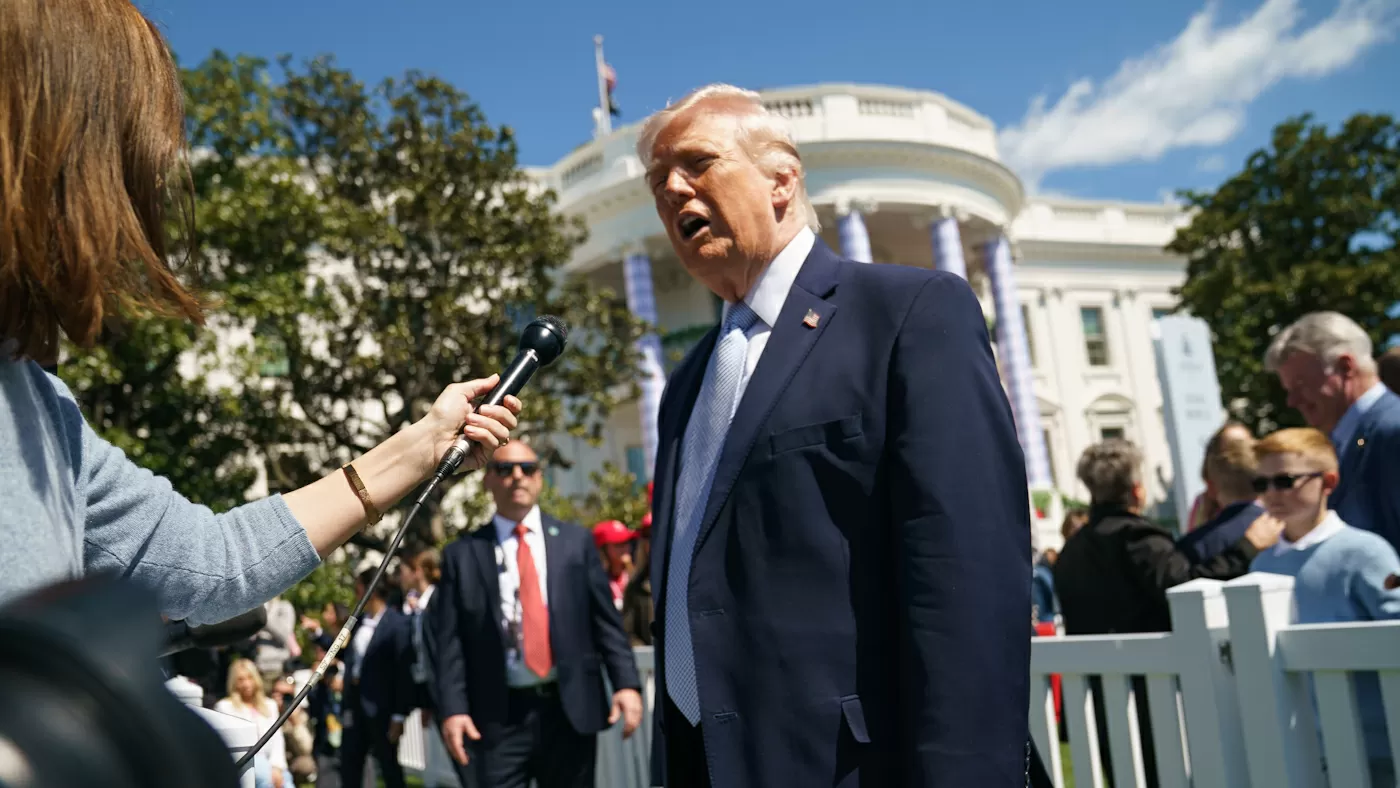
During a White House press conference on Monday, a reporter asked President Trump whether he would consider ending the ongoing trade war with China by implementing similar tactics as Iran in the Strait of Hormuz. In response, Trump suggested that the U.S. could also impose its own tolls on vessels trying to transit through the key energy shipping choke point.
The Strait of Hormuz, located between the Persian Gulf and the Gulf of Oman, is a crucial route for global oil supplies, with approximately one-fifth of the world’s oil passing through it. It has been a source of tension and conflict for decades, with Iran using it as a strategic location to control the flow of oil and exert its power in the region.
Iran has previously threatened to block the Strait of Hormuz in response to U.S. sanctions, causing disruptions in the global oil market and increasing tensions between the two countries. With President Trump’s suggestion to impose tolls, the U.S. would not only be countering Iran’s control over the choke point but also potentially gaining revenue from it.
This move has been met with mixed reactions, with some experts praising it as a strategic and economic win for the U.S., while others view it as a dangerous escalation of tensions in the already volatile region. However, President Trump remains confident in his decision, stating that it would be a “very easy thing” to do.
The suggestion of imposing tolls on vessels in the Strait of Hormuz is just the latest in a series of aggressive moves by the Trump administration towards Iran. The U.S. has already withdrawn from the Iran nuclear deal and imposed heavy sanctions on the country, leading to a sharp decline in Iran’s oil exports.
President Trump’s tough stance on Iran has been a cornerstone of his foreign policy, with the aim of pressuring the country into negotiating a new and stricter nuclear deal. The suggestion of imposing tolls on vessels in the Strait of Hormuz is seen as another way to increase the pressure on Iran and potentially bring them back to the negotiating table.
While the tolls would undoubtedly bring in revenue for the U.S., there are concerns about the potential consequences of such a move. The Strait of Hormuz is an important route for many countries, and any disruptions to the flow of oil could have a significant impact on the global economy. Furthermore, there are fears that this move could escalate tensions between the U.S. and Iran even further, leading to a potential military confrontation.
However, President Trump remains optimistic about the potential benefits of this strategy, stating that it could bring in “many billions of dollars” for the U.S. and reduce the country’s dependence on foreign oil. He also emphasized that the U.S. has the “ultimate control” over the Strait of Hormuz, and it is time for the country to start using it.
It is clear that President Trump’s suggestion has sparked a heated debate and raised important questions about the U.S.’s role in the Strait of Hormuz. While some see it as a strategic and economic move, others are concerned about the potential consequences and the impact it could have on global relations.
As the situation continues to unfold, it is important for all parties involved to carefully consider the implications of this suggestion and work towards finding a peaceful resolution. The Strait of Hormuz is a vital route for the global economy, and any actions taken should prioritize maintaining its stability and security.
President Trump’s suggestion may have its critics, but it is undoubtedly a bold move that could potentially change the dynamics of the region. Only time will tell whether this suggestion will be implemented and what impact it will have on the ongoing tensions between the U.S. and Iran.
