
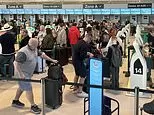
British travellers planning to visit Europe in the near future have been advised to prepare for potential delays and disruptions at airports as the European Union (EU) continues to roll out its Entry/Exit System (EES). This new system, which aims to strengthen the EU’s external borders, is set to be implemented in the coming months and is expected to cause significant changes in the way travellers enter and exit the continent.
The EES is a new electronic system that will be used to register the entry and exit of non-EU citizens travelling to and from the Schengen Area. This includes countries such as France, Germany, Italy, and Spain, which are popular destinations for British travellers. The system will collect and store biometric data, such as fingerprints and facial images, of all non-EU citizens entering and exiting the Schengen Area. This data will be used to verify the identity and eligibility of travellers, as well as to monitor their length of stay in the EU.
While the EES is expected to enhance security and streamline border control processes, it is also anticipated to cause some disruptions and delays at airports. This is due to the fact that all non-EU citizens, including British travellers, will be required to undergo additional checks and procedures upon arrival and departure. This may result in longer queues and wait times at immigration checkpoints, especially during peak travel periods.
The UK government has already issued a warning to British travellers, advising them to plan ahead and allow for extra time at airports when travelling to and from Europe. They have also urged travellers to ensure that their travel documents, such as passports and visas, are up-to-date and valid for the duration of their trip. Failure to comply with the new EES requirements may result in denied entry or even deportation from the Schengen Area.
Despite the potential disruptions, the EES is ultimately a positive step towards strengthening the EU’s external borders and ensuring the safety and security of its citizens and visitors. The system will also help to combat illegal immigration and reduce the risk of identity fraud. It is a necessary measure in today’s world, where the threat of terrorism and other security risks are ever-present.
Furthermore, the EES is not only beneficial for the EU, but also for British travellers. By having a more efficient and secure border control system, travellers can have peace of mind knowing that their safety is being prioritized. The EES will also help to reduce the likelihood of delays and disruptions in the long run, as it will speed up the border control process once it is fully implemented.
In addition, the EES is just one part of the EU’s wider efforts to improve border security and facilitate safe and legal travel. The EU is also working on implementing a new European Travel Information and Authorization System (ETIAS), which will require all non-EU citizens, including British travellers, to obtain a travel authorization before entering the Schengen Area. This system will further enhance security and reduce the risk of illegal immigration.
In conclusion, while the rollout of the EES may cause some disruptions and delays at European airports, it is a necessary step towards strengthening the EU’s external borders and ensuring the safety and security of its citizens and visitors. British travellers are advised to prepare for these potential disruptions and to comply with the new requirements in order to have a smooth and hassle-free travel experience. The EES is a positive development that will ultimately benefit both the EU and British travellers in the long run. So, let us embrace this change and look forward to a safer and more efficient travel experience in Europe.
