
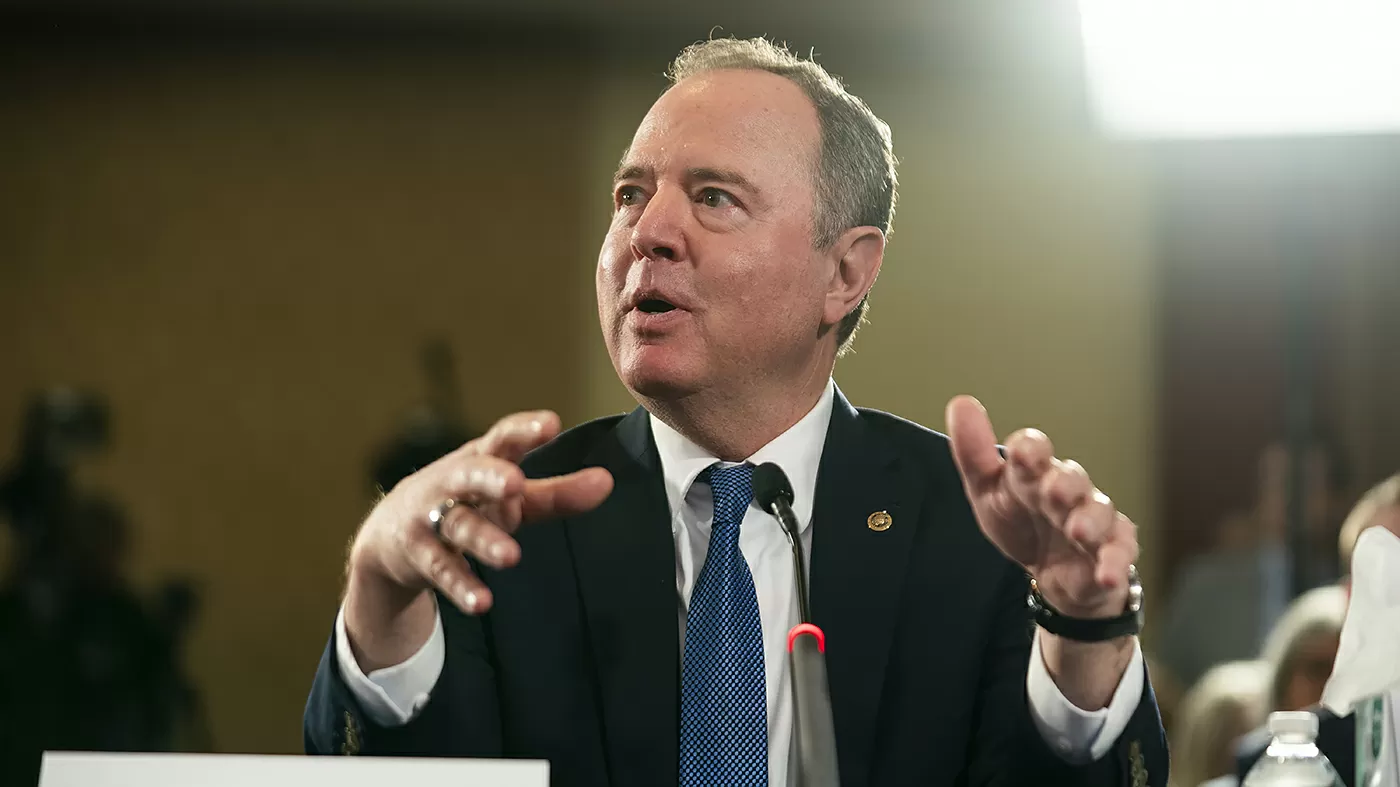
Sen. Adam Schiff (D-Calif.) has expressed skepticism about President Trump’s recent claims that the U.S. and Iran are in negotiations to resolve their ongoing conflict. In an interview on Monday, Schiff expressed doubts about the veracity of the president’s statements, citing his past track record of making false claims.
The Senator’s comments came in response to Trump’s statements at a press conference on Sunday, where he stated that the U.S. and Iran were discussing a possible resolution to the weeks-long conflict between the two nations. Trump also expressed optimism about the prospect of reaching a deal with Iran, stating that he believed they were “getting closer.”
While this news may seem promising, Schiff was quick to point out that the president has a history of making false statements. “If what the president is saying is true, that’s encouraging,” Schiff said. “But of course, we’ve heard the president say things that proved to be completely untrue in the past.”
Schiff’s doubts are not unfounded. Throughout his presidency, Trump has been known for making false and misleading claims, often contradicting himself and his own administration’s statements. In fact, according to a recent analysis by the Washington Post, Trump has made over 13,000 false or misleading statements since taking office.
This track record of dishonesty has raised concerns about the credibility of the president’s statements, especially when it comes to matters of national security and foreign policy. As the U.S. continues to navigate its tense relationship with Iran, it is crucial to have accurate and reliable information from our leaders.
Furthermore, Schiff’s skepticism is also reflective of the overall sentiment among many Americans. In a recent poll conducted by the Pew Research Center, only 39% of Americans said they trust the information coming from the Trump administration.
In light of this, it is understandable why Schiff and others may be hesitant to fully trust the president’s claims about negotiations with Iran. As the situation with Iran remains tense and unpredictable, it is important to carefully evaluate the information we receive and not blindly accept it as truth.
Despite these doubts, Schiff did acknowledge the potential benefits of a resolution between the U.S. and Iran. “If we are indeed making progress towards a resolution, that would be a positive development for both countries and the world,” he said.
The ongoing conflict between the U.S. and Iran has been a source of concern and uncertainty for many, with fears of a potential military confrontation. In the past weeks, tensions have been escalating, with both sides engaging in aggressive actions. As such, any progress towards a peaceful resolution should be welcomed and encouraged.
However, it is essential that any potential negotiations between the U.S. and Iran are based on honesty and transparency. The American people deserve to have accurate information from their government, especially when it comes to matters of national security.
In conclusion, Sen. Adam Schiff’s doubts about President Trump’s claims of negotiations with Iran are a reflection of the concerns and skepticism many Americans have towards the president’s statements. While the prospect of a resolution between the two nations is promising, it is crucial that we approach any potential developments with caution and critical thinking. Only with truthful and reliable information can we work towards a peaceful resolution and ensure the safety and well-being of both countries and the world.
