
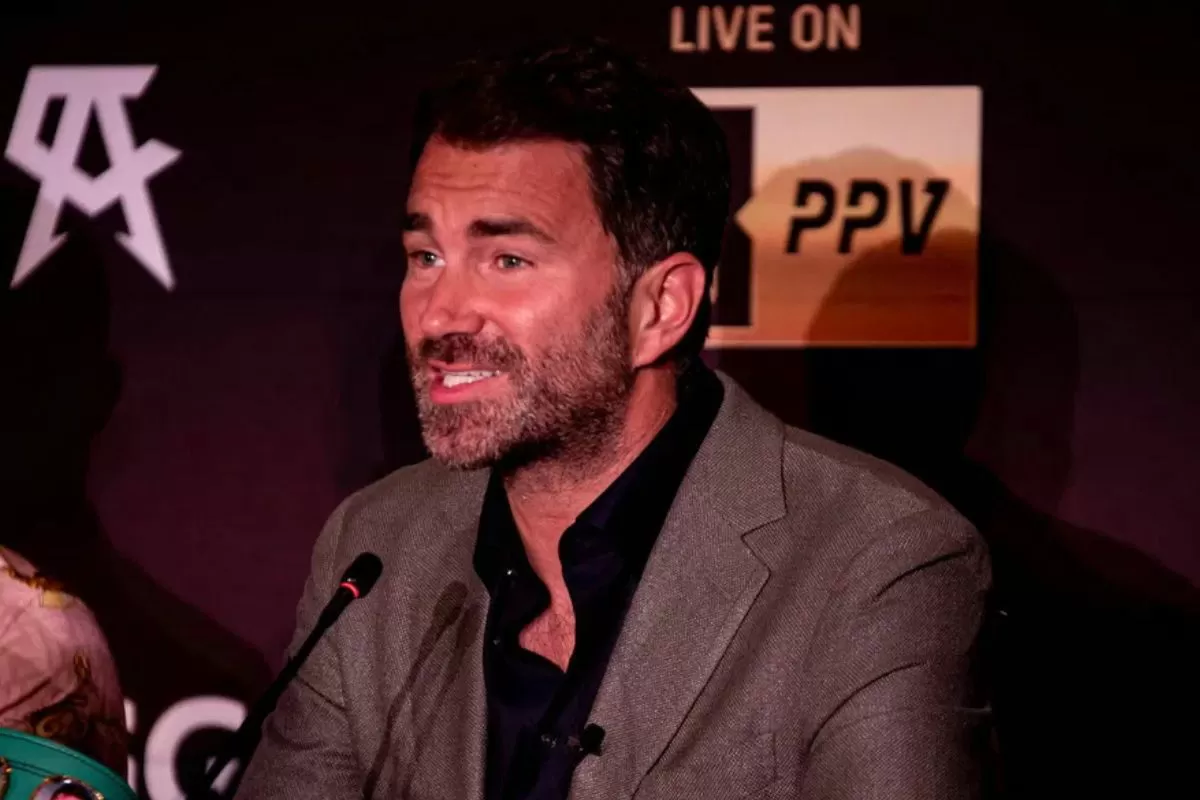
The world of combat sports is no stranger to rivalries and feuds between promoters. However, the ongoing rivalry between Dana White, President of the Ultimate Fighting Championship (UFC), and Eddie Hearn, head of Matchroom Boxing, has taken a new turn. The latest spark in their ongoing feud has now turned into a conversation about the UFC’s handling of interviews and questions from journalists. Hearn’s recent accusation has raised questions about the freedom of speech within the UFC and how much journalists can challenge the UFC head honcho.
For those unfamiliar with the feud, it all started when Hearn criticized White’s business decisions, particularly the UFC’s handling of the Conor McGregor vs. Dustin Poirier rematch. Hearn, who is known for his successful boxing promotions, questioned White’s decision to book the rematch without a live audience, stating that it was a missed opportunity for the UFC to generate more revenue. This sparked a back-and-forth between the two promoters, with White defending his decision and Hearn standing by his criticism.
However, the feud took a new turn when Hearn questioned the UFC’s media policies. In a recent interview, Hearn stated, “I don’t think the media can challenge Dana White. I don’t think they can ask him the questions they want to ask him.” This statement has raised concerns about the UFC’s control over media coverage and the freedom of speech within the organization.
In recent years, the UFC has faced criticism for its strict media policies, with journalists being limited in their ability to ask tough questions or challenge White’s decisions. This has led to a lack of transparency and accountability within the organization, with many feeling that the UFC is trying to control the narrative and avoid any negative press.
Hearn’s accusation has sparked a debate within the combat sports community, with many questioning the UFC’s handling of media interviews. Some have even gone as far as to suggest that the UFC is trying to silence any criticism or negative coverage by controlling the questions asked during interviews.
However, it is important to note that the UFC is not the only organization that has faced criticism for its media policies. Other major sports leagues, such as the NFL and NBA, have also been accused of controlling the media and limiting the freedom of speech of journalists. But in the case of the UFC, the accusations have gained more traction due to the ongoing feud between White and Hearn.
In response to Hearn’s accusation, White has stated that he has no control over what questions are asked during interviews and that he is always open to answering tough questions. He also pointed out that the UFC has a long history of allowing journalists to ask tough questions and that they have never shied away from addressing any controversies.
While it is true that the UFC has allowed journalists to ask tough questions in the past, the recent accusations have raised concerns about the organization’s media policies. With the UFC being the leading organization in the world of mixed martial arts, it is important for them to maintain transparency and allow journalists to ask tough questions without fear of repercussions.
In the end, it is up to the UFC to address these concerns and ensure that the media has the freedom to ask tough questions and hold the organization accountable. As fans of combat sports, we should all hope that the UFC takes these accusations seriously and works towards creating a more open and transparent environment for media coverage.
In conclusion, the ongoing feud between Dana White and Eddie Hearn has now turned into a conversation about the UFC’s media policies. Hearn’s accusation has raised concerns about the organization’s control over media coverage and the freedom of speech within the UFC. It is now up to the UFC to address these concerns and ensure that the media has the freedom to ask tough questions and hold the organization accountable. As fans, we can only hope that the UFC takes these accusations seriously and works towards creating a more open and transparent environment for media coverage.
