
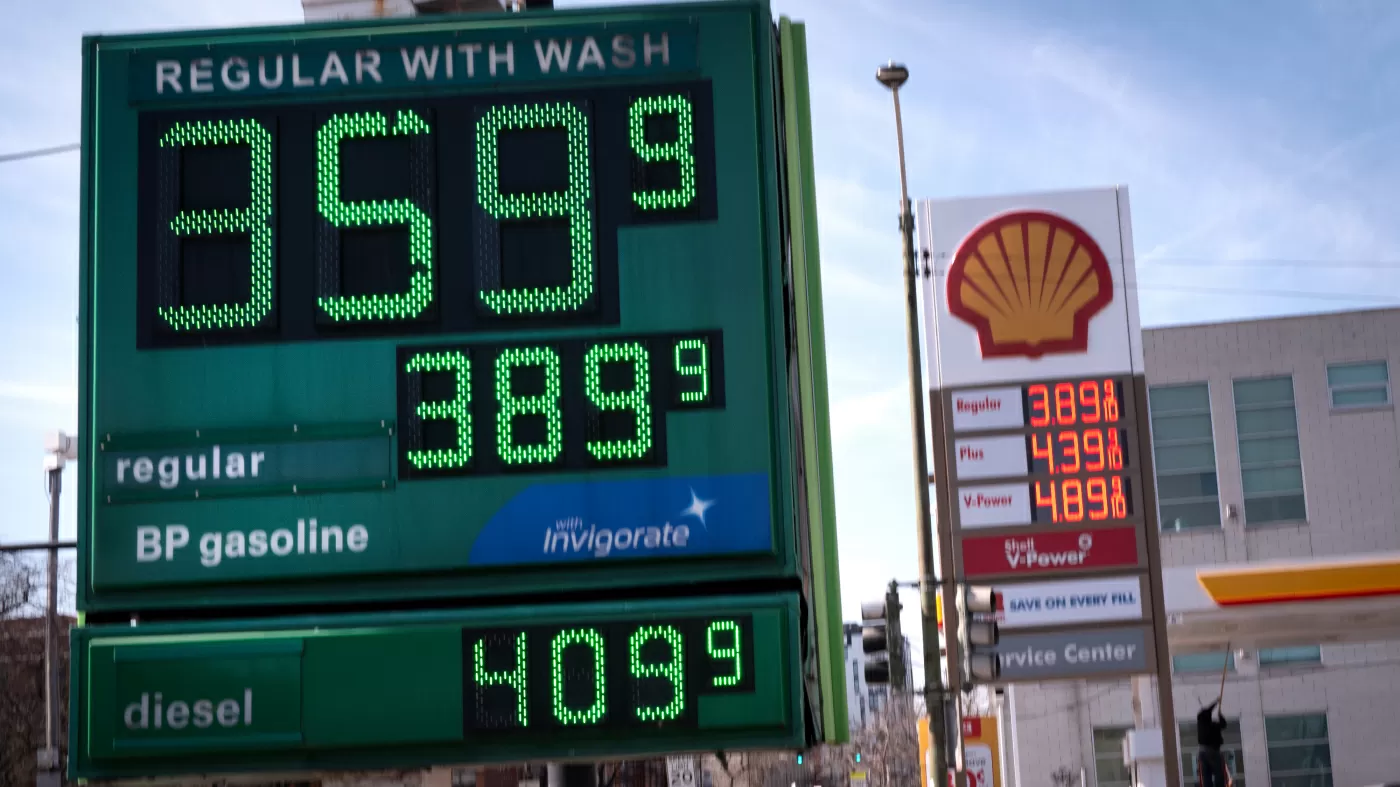
The recent U.S.-Israel strikes on Iran have had a major impact on global oil prices, causing concern and speculation among consumers. The price of Brent Crude oil, the international benchmark, has surged to $77 per barrel as of Monday afternoon, jumping from $71 just a week ago and $66 per barrel a month ago. This sharp increase is expected to lead to a rise in costs for consumers at the pump, raising worries about the impact on their wallets.
The strikes, carried out by the United States and Israel, were a response to Iran’s aggressive actions in the Middle East region. While the exact details of the strikes have not been disclosed, it is believed that they targeted key oil facilities in Iran, disrupting its oil production and exports. This has caused a ripple effect in the global oil market, with prices surging as a result of the uncertainty and instability caused by these attacks.
The surge in oil prices is a cause for concern for consumers, especially those who rely heavily on their cars for transportation. As the cost of crude oil goes up, so does the price of gasoline at the pump. This means that consumers can expect to see an increase in their fuel expenses in the coming weeks. This could have a significant impact on their budgets and spending habits, causing them to cut back on other essential items to compensate for the rise in gasoline costs.
However, it’s not just individual consumers who are affected by the increase in oil prices. Businesses, particularly those in the transportation and manufacturing industries, are also feeling the pinch. As the cost of fuel rises, so does the cost of production and transportation, which could lead to an increase in the prices of goods and services. This could have a ripple effect on the economy, causing inflation and potentially slowing down economic growth.
But despite these concerns, there is also a silver lining to this situation. The surge in oil prices is expected to benefit oil-producing countries, such as the United States, Saudi Arabia, and Russia, who are major players in the global oil market. The increase in revenue from oil exports could potentially boost their economies and improve their financial stability. This could also have a positive impact on job creation and investment opportunities in these countries.
Moreover, the surge in oil prices could also incentivize alternative energy sources, such as renewable energy and electric vehicles, as consumers and businesses look for more cost-effective and sustainable options. This could have a long-term positive impact on the environment and contribute to reducing dependence on fossil fuels.
It’s also worth noting that the increase in oil prices is not expected to be a long-term trend. As tensions ease and the situation in the Middle East stabilizes, oil prices are expected to return to normal levels. This means that the impact on consumers and businesses will only be temporary, and things will eventually go back to normal.
In conclusion, while the U.S.-Israel strikes on Iran have caused a surge in oil prices, it’s important to keep in mind that this is a temporary situation. While consumers may see a slight rise in their expenses at the pump, the long-term benefits of this situation, such as boosting the economies of oil-producing countries and promoting alternative energy sources, cannot be ignored. So let’s stay positive and hopeful for a quick resolution to this situation, and trust that things will soon return to normal.
