
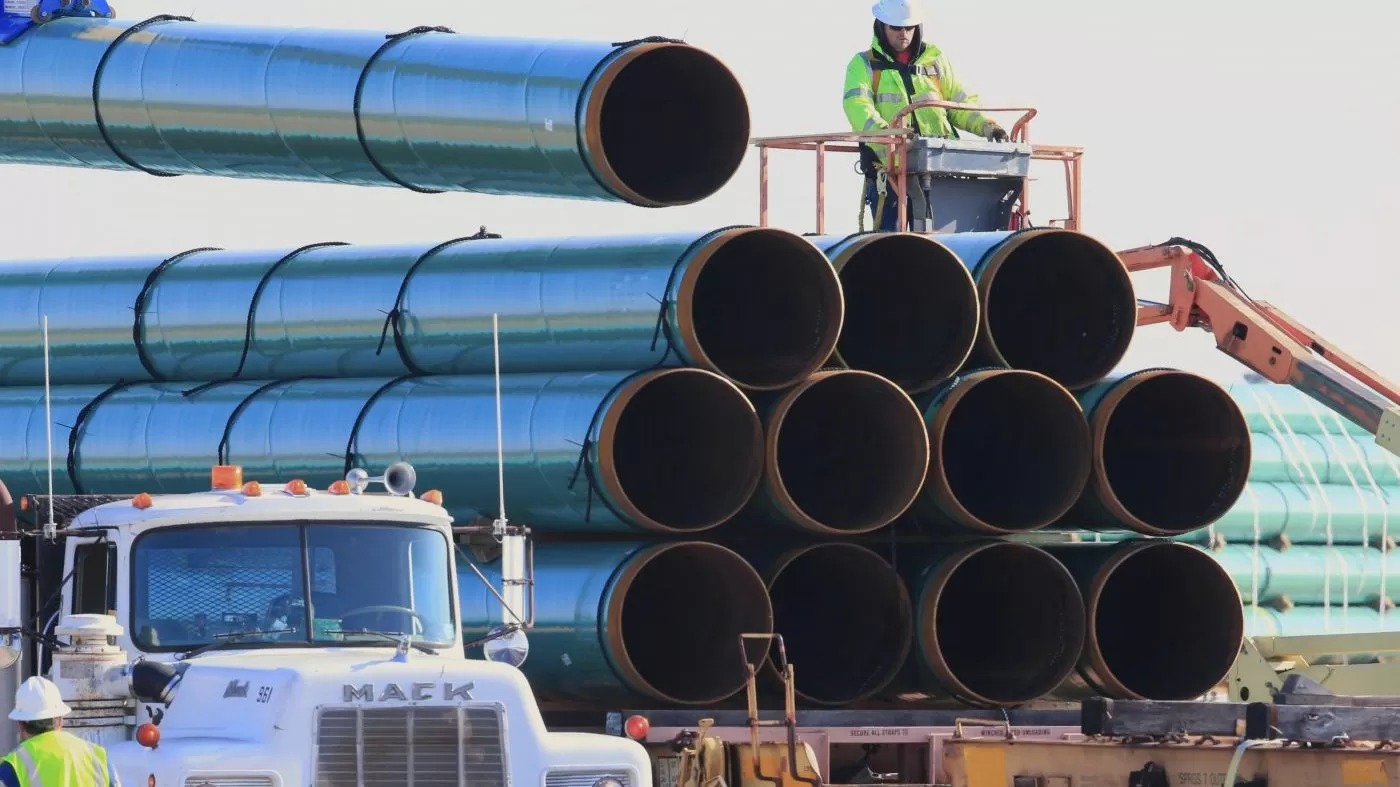
North Dakota Judge Orders Greenpeace to Pay $345 Million in Damages for Protests Against Dakota Access Pipeline
In a landmark decision, North Dakota Judge James Gion has ordered Greenpeace to pay damages estimated at $345 million to Energy Transfer, the company behind the controversial Dakota Access oil pipeline. The ruling comes after months of legal battles between the two parties, and is seen as a major victory for the energy industry.
The protests against the Dakota Access pipeline, which began in 2016, have been a source of contention and controversy. Greenpeace, along with other environmental groups, have been vocal in their opposition to the pipeline, citing concerns about its potential impact on the environment and indigenous communities. However, their actions have not gone unnoticed by the court.
In his court papers filed on Tuesday, Judge Gion stated that Greenpeace International, Greenpeace USA and Greenpeace Fund Inc. would each be held responsible for paying the damages. This decision is a clear message that the court will not tolerate illegal and disruptive protests that cause harm to businesses and their operations.
The ruling is a significant blow to Greenpeace, which has been at the forefront of the protests against the Dakota Access pipeline. The organization has a long history of advocating for environmental causes and has often resorted to direct action and civil disobedience to make their voices heard. However, this time, their actions have come at a hefty price.
The damages awarded to Energy Transfer are not only a financial blow to Greenpeace, but also a symbolic one. It sends a strong message that the court will not tolerate unlawful and destructive behavior, regardless of the cause. This ruling sets a precedent for future cases involving protests against energy projects and serves as a warning to other activist groups.
The Dakota Access pipeline has been a contentious issue since its inception. The $3.8 billion project, which spans over 1,100 miles, has faced numerous legal challenges and protests. However, despite the opposition, the pipeline was completed in 2017 and has been operational since then. The protests have caused significant delays and disruptions to the project, resulting in financial losses for Energy Transfer.
Judge Gion’s ruling is a victory for Energy Transfer and the energy industry as a whole. It reaffirms the importance of upholding the law and protecting businesses from unlawful and disruptive actions. The court has recognized the impact of the protests on the company’s operations and has taken a strong stance against such behavior.
Greenpeace has vowed to appeal the decision, stating that it is an attack on their right to peaceful protest. However, the court has made it clear that while peaceful protests are a fundamental right, they must be carried out within the boundaries of the law. The damages awarded to Energy Transfer are a result of the organization’s unlawful and disruptive actions, not their right to protest.
The ruling has been welcomed by the energy industry, with many seeing it as a step towards ensuring that projects like the Dakota Access pipeline can be completed without facing constant opposition and disruptions. It also serves as a reminder that the energy industry is a vital part of our economy and should not be hindered by illegal and destructive protests.
In conclusion, Judge Gion’s decision to order Greenpeace to pay $345 million in damages to Energy Transfer is a significant victory for the energy industry. It sends a strong message that the court will not tolerate unlawful and disruptive protests, and that businesses have the right to operate without facing constant opposition. This ruling sets a precedent for future cases and serves as a warning to other activist groups that their actions will have consequences.
