
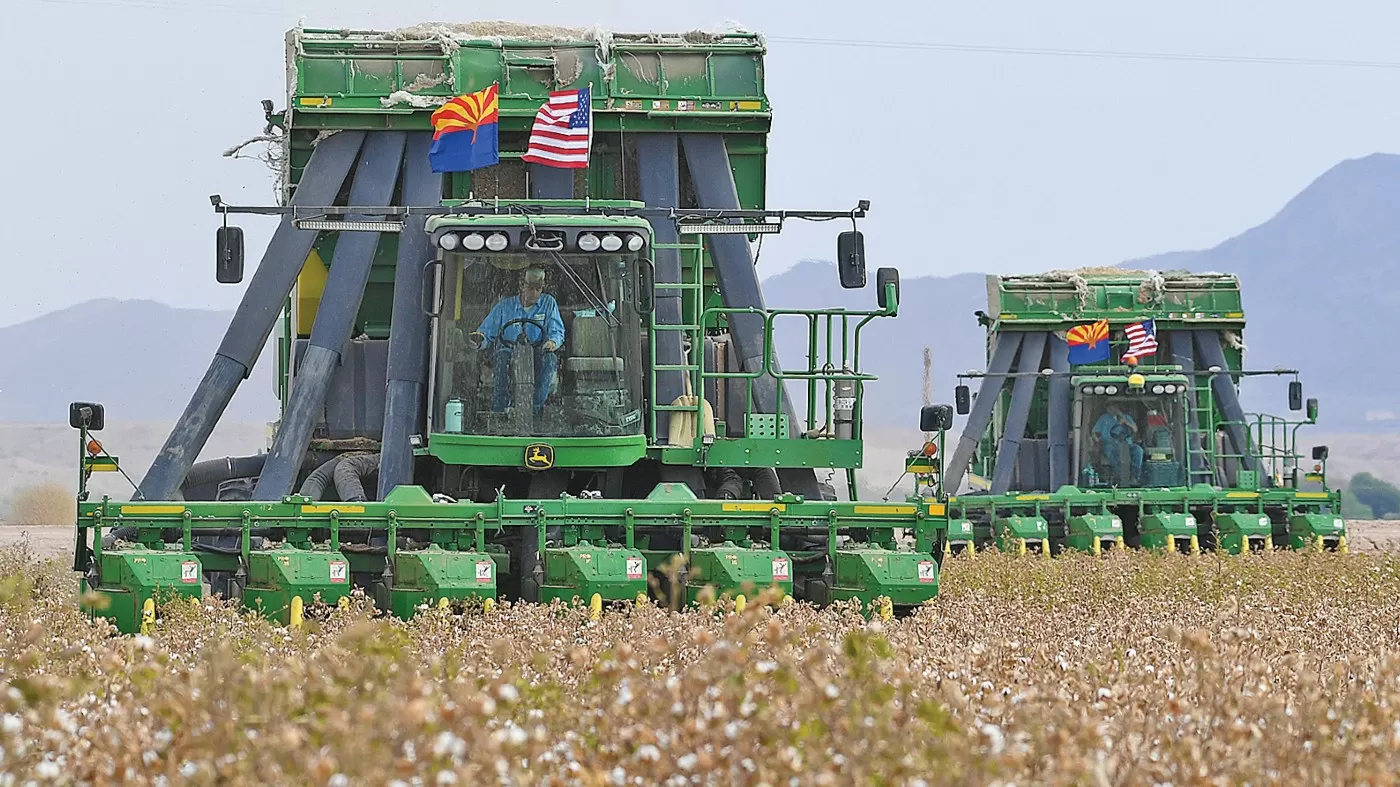
The Trump administration has made a decision that has sparked both praise and criticism from various groups. In a statement released late Friday afternoon, the Environmental Protection Agency (EPA) announced that it will reapprove the controversial herbicide dicamba for use on cotton and soybeans for the next two years. This move comes after months of debate and pressure from different stakeholders.
Dicamba has been used as a weed killer for decades, but its use has been met with controversy in recent years. The herbicide has been linked to crop damage and has been the subject of numerous lawsuits. However, supporters of dicamba argue that it is an effective tool for controlling weeds and increasing crop yields.
The EPA’s decision to reapprove dicamba comes as the Trump administration faces competing pressure from different groups. On one hand, farmers and agribusinesses have been pushing for the reapproval of the herbicide, citing its effectiveness in controlling weeds and increasing crop yields. On the other hand, environmental groups and some farmers have been calling for a ban on dicamba, citing its harmful effects on non-target crops and the environment.
In its statement, the EPA acknowledged the concerns raised by both sides and announced that it will be implementing some restrictions on the use of dicamba. These restrictions include limiting the use of dicamba to only certified applicators, requiring additional training and record-keeping, and prohibiting the use of dicamba on crops after a certain growth stage. These measures are aimed at reducing the potential for off-target damage and ensuring responsible use of the herbicide.
The decision to reapprove dicamba has been met with mixed reactions. Supporters of the herbicide are pleased with the EPA’s decision, stating that it will allow farmers to continue using a valuable tool for weed control. They also argue that the restrictions put in place will address the concerns raised by opponents of dicamba.
On the other hand, opponents of dicamba are disappointed with the reapproval, stating that it does not go far enough to protect non-target crops and the environment. They argue that the restrictions put in place are not sufficient and that a complete ban on dicamba is necessary to prevent further damage.
The EPA’s decision to reapprove dicamba for two years is seen as a compromise between the competing interests of different groups. It allows for the continued use of the herbicide while also addressing some of the concerns raised by opponents. However, it is clear that the debate surrounding dicamba is far from over.
In the coming years, the EPA will continue to monitor the use of dicamba and its impact on crops and the environment. This will provide valuable data and insights that will inform future decisions on the use of the herbicide. In the meantime, it is important for farmers and applicators to follow the restrictions put in place and use dicamba responsibly to minimize any potential harm.
In conclusion, the Trump administration’s decision to reapprove dicamba for use on cotton and soybeans with restrictions has sparked both praise and criticism. While supporters of the herbicide are pleased with the decision, opponents argue that it does not go far enough to protect non-target crops and the environment. Only time will tell if the restrictions put in place will be effective in addressing these concerns. In the meantime, it is important for all stakeholders to work together to find a balance between effective weed control and responsible use of dicamba.
