
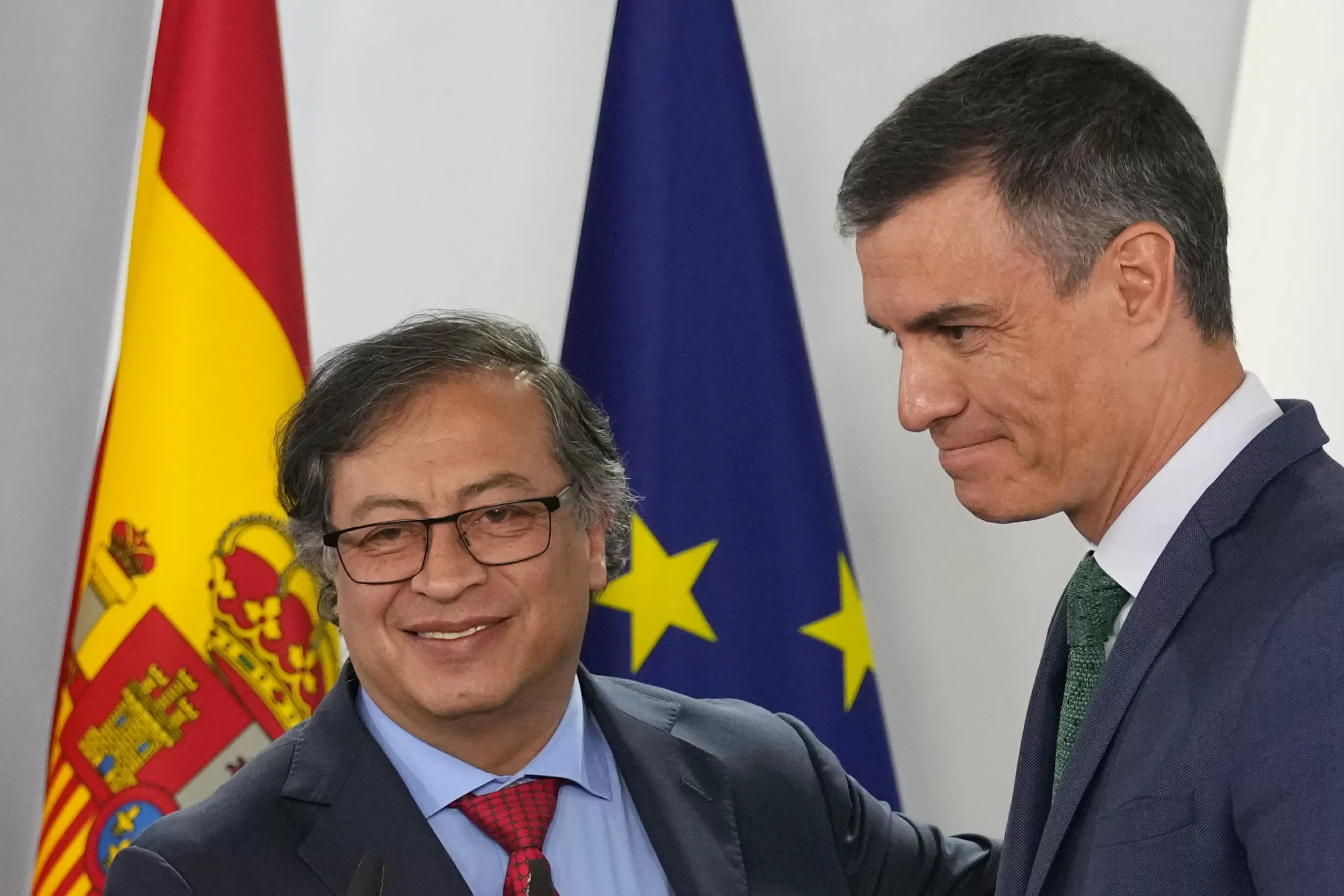
In a recent interview with CNN, Colombian President Gustavo Petro made a bold statement about the ongoing political turmoil in Venezuela. According to Petro, the Trump administration’s pressure campaign in Venezuela is not focused on the fight against narcotics, as many may believe, but rather on the country’s abundant oil reserves.
Petro’s remarks came as no surprise to many, considering the deep-rooted relationship between oil and politics in Latin America. Venezuela, which holds the world’s largest oil reserves, has long been a key player in the global oil market. However, with the country’s economy in a downward spiral, the control of its oil resources has become a hotly contested issue.
The Colombian president’s comments shed light on the true intentions behind the US’s involvement in the Venezuelan crisis. Petro believes that the Trump administration’s actions are not driven by concerns over drug trafficking, but rather by the desire to gain control over Venezuela’s vast oil reserves. He stated, “Oil is at the heart of the matter. So, that’s a negotiation about oil. I believe that is…”.
Petro’s statement has raised questions about the US’s true motives in its involvement in Venezuela. While the US has repeatedly expressed its concern over the rise of drug trafficking in the region, its actions in Venezuela seem to tell a different story. In fact, many critics argue that the US’s intervention in Venezuela is a strategic move to secure its own economic interests, rather than a genuine effort to combat drug trafficking.
The Colombian president’s words also bring attention to the role of oil in shaping international relations. In today’s world, where energy resources are a key factor in global politics, it is not surprising to see powerful nations using their influence to control the flow of oil. Venezuela’s oil reserves, which are estimated to be around 300 billion barrels, make it a highly coveted prize for countries like the US.
But Petro’s remarks also highlight the consequences of this power struggle for the people of Venezuela. The ongoing political unrest and economic crisis in the country have taken a toll on its citizens, who are struggling to meet their basic needs. The US’s pressure campaign has only exacerbated the situation, leaving the people of Venezuela caught in the crossfire of a political and economic battle.
Petro’s statement serves as a reminder that the fight for control over oil resources often comes at the expense of the well-being of ordinary people. It also calls for a more nuanced approach in addressing the crisis in Venezuela. Instead of focusing solely on the country’s oil reserves, the international community should prioritize finding a peaceful and sustainable solution that takes into account the needs and rights of the Venezuelan people.
Moreover, Petro’s comments serve as a wake-up call for the US to re-evaluate its approach towards Latin America. The US has a long history of intervention in the region, often driven by its own economic interests. However, it is time for the US to shift its focus towards building stronger relationships with its Latin American neighbors, based on mutual respect and cooperation.
In conclusion, President Petro’s words have brought attention to the underlying motives behind the US’s involvement in the Venezuelan crisis. His statement serves as a reminder that the fight for control over oil resources should not come at the expense of the well-being of ordinary people. It is time for the international community, especially the US, to prioritize finding a peaceful solution to the crisis in Venezuela, rather than pursuing their own economic interests. Let us hope that Petro’s words will inspire positive change and pave the way for a brighter future for the people of Venezuela.
