
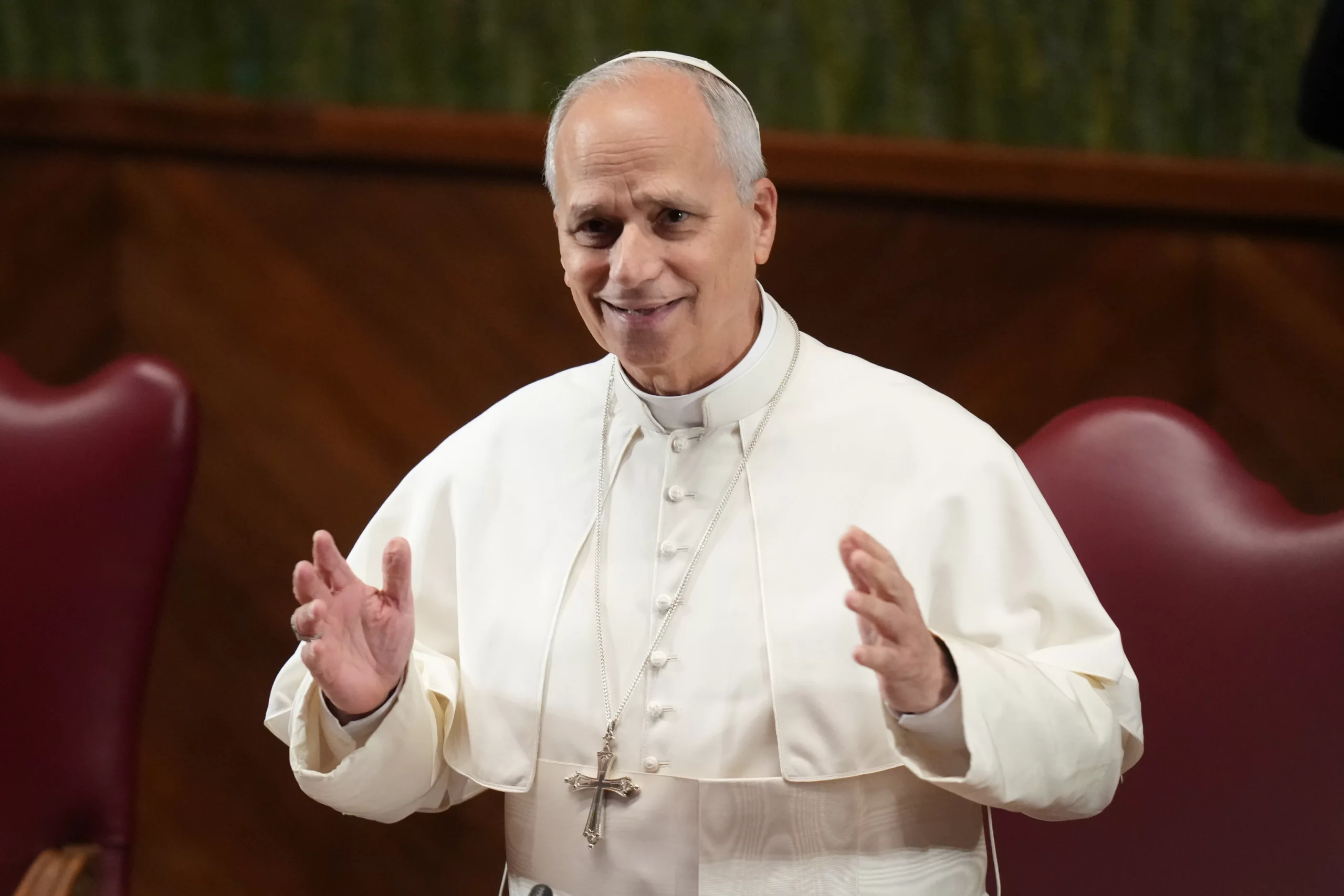
BELEM, Brazil (AP) – In a powerful address at the United Nations climate talks, Pope Leo XIV called for immediate action to address the urgent threat of climate change. The Pope urged world leaders to take concrete steps to combat global warming, warning that we are failing to protect and preserve the planet for future generations.
Delivering his speech on Monday, the Pontiff emphasized that the effects of climate change are being felt around the world, with extreme weather events like floods, droughts, storms, and scorching temperatures becoming more frequent and severe. He urged countries to put aside their differences and work together to find sustainable solutions to this pressing issue.
The Pope’s words come at a crucial time, as the world is facing an unprecedented climate crisis. The latest report from the Intergovernmental Panel on Climate Change (IPCC) warned that the Earth’s temperature is rapidly rising, and urgent action is needed to limit global warming to 1.5 degrees Celsius above pre-industrial levels. This is the critical threshold to avoid the worst impacts of climate change, such as sea-level rise, extreme weather, and loss of biodiversity.
Pope Leo XIV stressed that we cannot ignore the signs of our planet’s distress. He made a passionate plea to world leaders, saying, “God’s creation is crying out in floods, droughts, storms, and relentless heat. We must listen and take action now before it’s too late.” His statement serves as a powerful reminder that the environment is a gift from God, and it is our responsibility to cherish and safeguard it.
The Pope’s call for action is significant, as the Catholic Church has long been a vocal advocate for environmental protection and sustainability. In his groundbreaking encyclical “Laudato Si,” Pope Francis called for an urgent and collective response to climate change, labeling it a “global problem with grave implications: environmental, social, economic, political, and for the distribution of goods.” The Pope’s powerful message has resonated with people from all walks of life, regardless of their religious beliefs.
Furthermore, the Pope emphasized the disproportionate impact of climate change on the most vulnerable communities, particularly in developing countries. He urged developed nations to take responsibility for their historical contributions to climate change and support developing nations in their efforts to combat its effects. This is crucial as developing countries often lack the resources and infrastructure to withstand and recover from extreme weather events.
The Pope also called on governments to implement policies and measures that promote sustainable development and renewable energy. He emphasized that technological and economic progress should not come at the expense of our planet’s health. Instead, we should strive for a balance between human progress and environmental stewardship.
The Pontiff’s message resonates not only with world leaders but also with each and every one of us. We must all take responsibility for our actions and make conscious efforts to reduce our carbon footprint. Simple lifestyle changes such as reducing energy consumption, using public transportation, and recycling can make a significant impact.
In response to the Pope’s call, many countries at the UN climate talks have pledged to increase their efforts to combat climate change. However, much more needs to be done, and it is crucial that we hold our leaders accountable for their promises. We cannot afford to continue with business as usual, and the time for decisive action is now.
As we look towards the future, we must remember that this planet is not only our home but also a fragile ecosystem that needs our care. The Pope has reminded us that it is our moral duty to protect and preserve it for generations to come. Let us heed his call and come together to create a more sustainable and resilient world. As the Pope said, “The future of humanity is at stake, and there is no time to waste.”
