
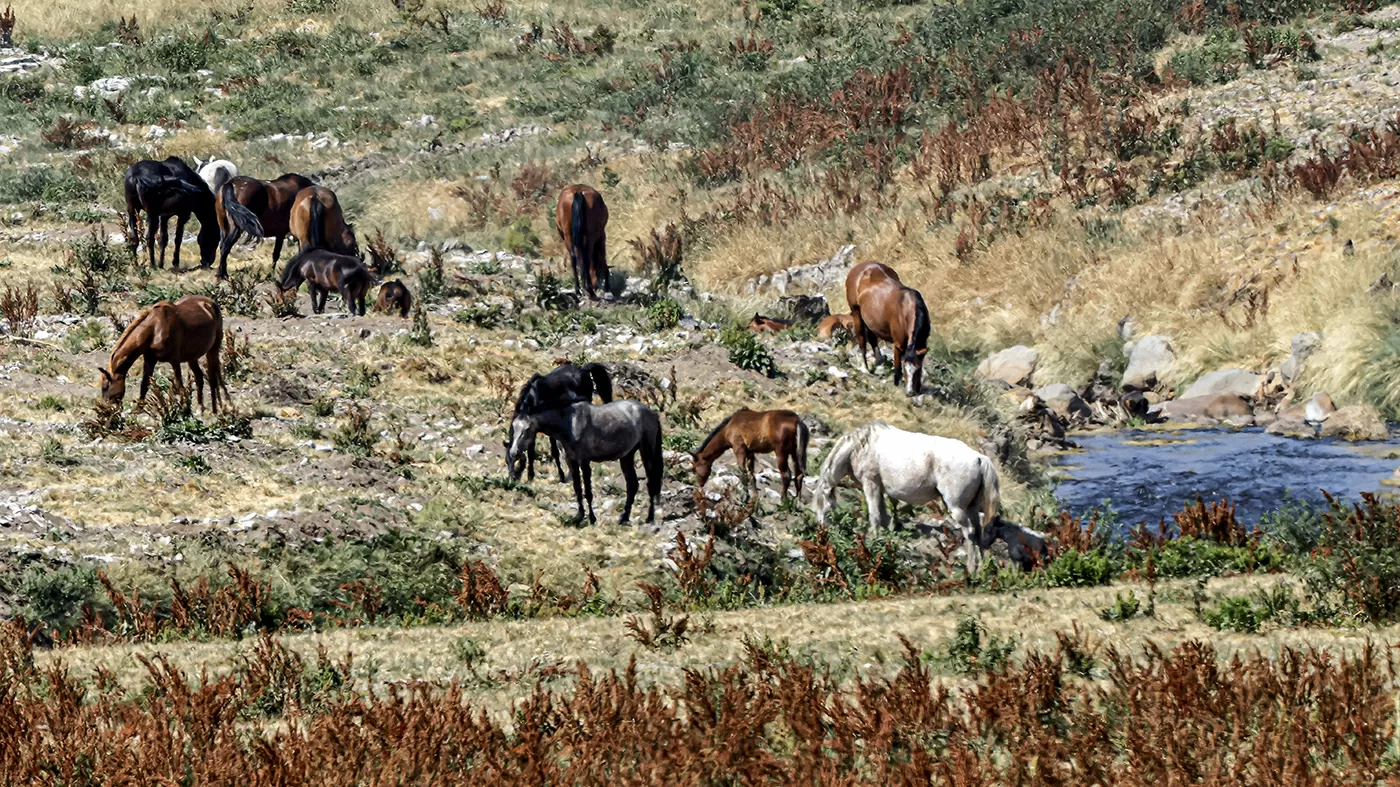
The study of ancient migration patterns between wild horse populations in America and Asia has shed new light on the ability of ecosystems to adapt and survive in the face of cataclysmic change. This research, published in Science on Thursday, challenges traditional notions of conservation and highlights the importance of blending Western and Indigenous traditions of science.
The study, led by Dr. Sarah Lehman of the University of California, Santa Barbara, examined the genetic makeup of modern wild horse populations in North America and Eurasia and compared it to ancient horse DNA from the same regions. The results revealed a complex and interconnected history of migration and adaptation that has allowed these animals to thrive even in the face of major environmental shifts.
According to the study, ancient horse populations in North America and Eurasia were closely related, with evidence of interbreeding between the two regions. This suggests that these animals were able to travel long distances and adapt to new environments, forming a network of interconnected populations that allowed for genetic diversity and resilience.
However, the study also found that modern conservation efforts may unintentionally hinder this natural process of adaptation and migration. The focus on preserving specific populations in isolated areas, often with strict genetic management, may limit the ability of these animals to adapt to changing conditions. This is especially concerning in the face of climate change, which is causing significant shifts in ecosystems around the world.
Dr. Lehman explains, “Our study shows that ancient horse populations were able to adapt to changing environments through migration and interbreeding. This natural process of adaptation is crucial for the survival of these animals, but our modern conservation strategies may be unintentionally hindering it.”
The findings of this study have important implications for the conservation of wild horse populations, as well as for the wider understanding of ecosystem resilience. By blending Western and Indigenous approaches to science, this research highlights the importance of considering the interconnectedness of different populations and the need for adaptive strategies in conservation efforts.
Dr. Lehman and her team collaborated with Indigenous communities in North America and Eurasia to gain a deeper understanding of the historical and cultural significance of wild horses. This approach allowed for a more holistic and nuanced understanding of the relationship between these animals and their environments.
“Our collaboration with Indigenous communities has been invaluable in this research. Their traditional knowledge and understanding of the land has provided essential insights into the history and behavior of wild horses,” says Dr. Lehman.
The study also raises questions about the impact of human activity on ecosystems and the importance of preserving natural migration patterns. The introduction of domestic horses and the subsequent decline of wild horse populations in North America and Eurasia have disrupted these ancient migration routes, leading to a loss of genetic diversity and potentially hindering the ability of these animals to adapt to future changes.
Dr. Lehman concludes, “As we continue to face global environmental challenges, it is crucial that we learn from the natural strategies of adaptation and resilience that have allowed wild horse populations to thrive for thousands of years. By blending Western and Indigenous approaches to science, we can develop more effective and sustainable conservation strategies that will benefit both wild horses and their ecosystems.”
This groundbreaking study serves as a reminder of the importance of collaboration and a holistic approach to conservation. By incorporating traditional knowledge with modern scientific methods, we can gain a deeper understanding of the natural world and work towards a more sustainable future for all species, including wild horses.
